Listing your home on the MLS can help your property appear where many buyers, agents, and real estate websites look for homes. If you want to sell without hiring a traditional full-service agent, the usual path is a flat-fee MLS service or limited-service broker that can place your listing into the local MLS while you handle much of the sale yourself. This guide explains how to list a house on MLS, what to prepare, and how to avoid common mistakes that can slow down your sale.
What does it mean to list your home on the MLS?
Listing your home on the MLS means your property details are entered into a local multiple listing service, a shared database used by real estate professionals to market homes and share listing information. In many markets, MLS data also feeds to popular home search websites, which can increase visibility beyond a yard sign or social media post. The National Association of REALTORS® publishes general information about how MLSs operate.
For sellers, the MLS is not just a place to post photos. It is where buyers’ agents look for homes that match their clients’ needs, where showing instructions are stored, and where key details like price, property features, commission offers, and disclosures may be noted. Because each MLS has its own rules, forms, fields, and local customs, the exact process can vary by area.
If you are researching how to list on MLS by owner, the most important point is this: homeowners usually cannot directly enter a listing into the MLS on their own. In most cases, you need a licensed broker or MLS participant to submit the listing for you. That does not mean you must hire a traditional agent for the full sale, but it does mean you need the right listing arrangement.
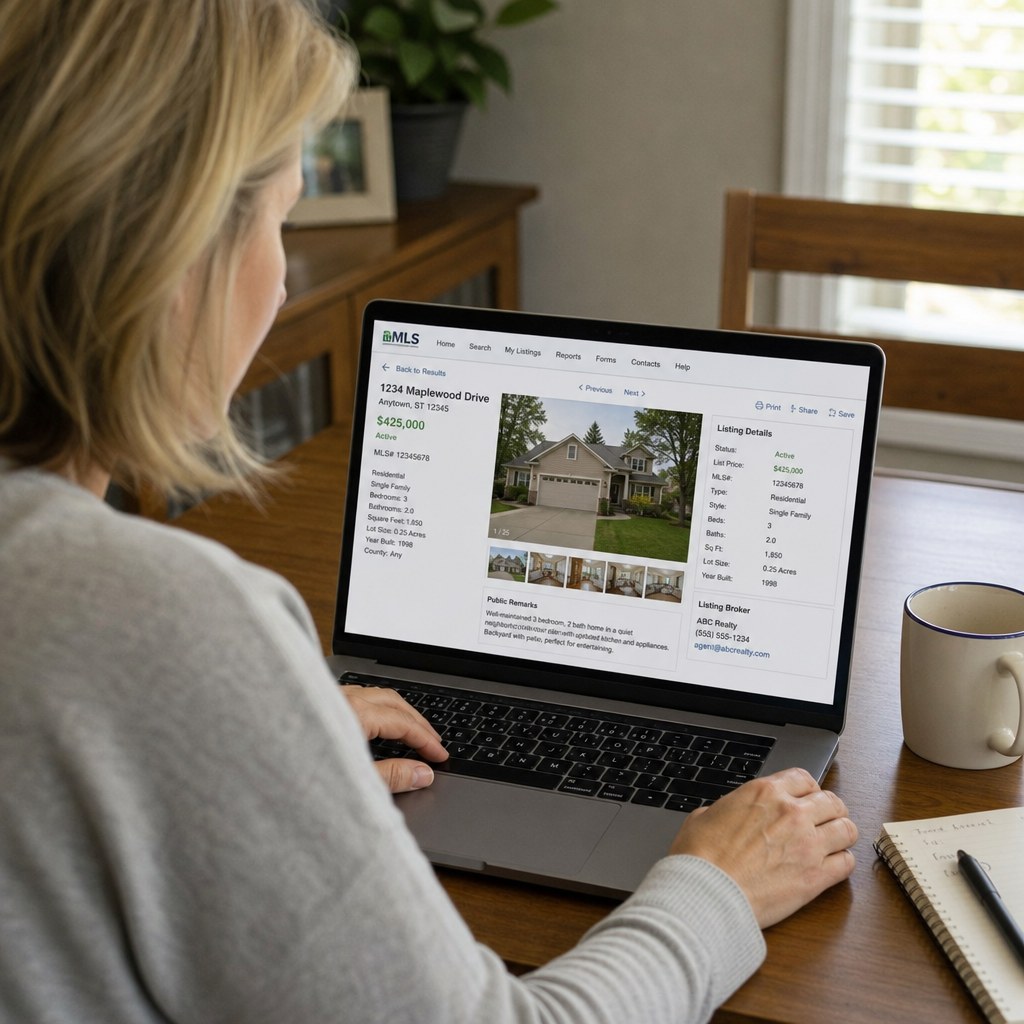
Your main options for getting onto the MLS
There are several ways to get your home into the MLS, and the best choice depends on how much support you want. Some sellers want full guidance from pricing through closing. Others are comfortable managing photos, showings, negotiations, and paperwork with limited professional help.
Traditional full-service agent
A full-service listing agent typically handles pricing advice, listing preparation, MLS entry, marketing, showings strategy, negotiation, contract management, and coordination through closing. This can be useful if you want a hands-on professional guiding the process or if your sale involves complications such as a relocation timeline, estate situation, tenant-occupied property, or unusual home features. See what a listing agent does.
The tradeoff is cost and control. You may pay a listing commission, and you will usually follow the agent’s process for pricing, scheduling, marketing, and offer review. For many sellers, that support is worth it. For others, especially experienced or highly involved sellers, a lighter service model may be more appealing.
Flat-fee MLS or limited-service broker
A flat-fee MLS service is a common way to list on MLS without realtor representation in the traditional full-service sense. You pay a broker or listing service to place your property on the MLS, while you take responsibility for many tasks a listing agent would normally handle. Depending on the provider, service levels may include basic MLS entry only or optional support for forms, pricing, changes, and negotiations.
This option is popular with sellers who want a for sale by owner listing on MLS but still want the exposure that MLS placement can provide. It can reduce listing-side service costs, but it also shifts more responsibility to you. You will need to be organized, responsive, and ready to manage buyer questions, showing requests, offers, deadlines, and local disclosure requirements.
For sale by owner without MLS
You can also sell as a pure FSBO without MLS exposure by using signs, online classifieds, social media, neighborhood groups, and your personal network. This gives you control, but visibility may be more limited. Buyers who rely on agents may never see your home unless the property appears in the MLS or on the websites they use. Compare the trade-offs in FSBO vs. a listing agent.
This route can work in a very hot market or when you already have an interested buyer. However, if your goal is to reach the broadest pool of qualified buyers, learning how to list home on MLS is usually worth considering.
How to list on MLS by owner, step by step
The basic process is straightforward, but the details matter. A clean, accurate listing builds trust and helps buyers decide whether your home is worth seeing.
- Research local MLS access options. Search for flat-fee MLS providers, limited-service brokers, or local real estate professionals who offer MLS-only or reduced-service packages. Compare what is included, not just the fee.
- Confirm the service area. MLS systems are local or regional. Make sure the provider can place your property in the MLS that covers your home’s market, not just a nearby area.
- Review the listing package. Look for details such as listing term, number of photos allowed, included changes, cancellation policy, yard sign options, showing tools, and whether forms or contract support are available.
- Prepare property information. Gather square footage, lot size, room details, parking, utilities, HOA information, tax details, appliances, upgrades, and any known issues. Use reliable sources when possible.
- Set a realistic price. Review recent comparable sales, active competition, and pending listings if available. Pricing too high can reduce interest, while underpricing without a strategy can leave money on the table. Our post on how to price your home walks through the process.
- Take strong listing photos. Clean, declutter, use good lighting, and show the home’s most important spaces. Photos often determine whether buyers click, save, or skip the listing.
- Write a clear listing description. Focus on the home’s strongest features, location benefits, layout, updates, outdoor space, and practical details. Avoid exaggeration or claims you cannot support.
- Submit required forms and disclosures. Your provider may ask for listing agreements, property disclosures, MLS input sheets, lead-based paint forms, HOA details, or other local documents.
- Approve the live listing carefully. Check spelling, price, photos, map location, showing instructions, compensation fields, property facts, and contact details before buyers start responding.
- Manage inquiries and offers promptly. Once active, respond quickly. Delayed replies can cause buyers and agents to move on to competing homes.
This is the practical answer to how to list on MLS: choose a qualified MLS access provider, prepare accurate listing materials, review every field carefully, and be ready to act like the listing manager once the property goes live.
Details that make your MLS listing stronger
Getting into the MLS is only the first step. A weak listing can still underperform if the price, photos, description, or showing process creates friction. Buyers compare homes quickly, so your listing should make the next step feel easy.
Start with accuracy. If the bedroom count, square footage, school information, HOA fee, or included appliances are wrong, you may create confusion or even contract issues later. When you are unsure, verify the detail before publishing or describe it more generally.
Next, think like a buyer scrolling through listings. The first photo should usually show the strongest view of the home, often the exterior or a bright main living space. The description should not repeat every field already shown in the listing. Instead, use it to explain what makes the home livable: a flexible floor plan, updated kitchen, private yard, storage, commute convenience, or nearby amenities.
A useful listing checklist includes:
- Accurate property facts: beds, baths, size, lot, parking, year built, utilities, HOA, taxes, and included items.
- High-quality photos: bright, level, uncluttered images that show flow from room to room.
- Buyer-focused description: specific benefits without hype, unsupported claims, or vague filler.
- Clear showing instructions: easy scheduling, access details, notice requirements, and any restrictions.
- Disclosure readiness: documents prepared before buyers ask, when required or appropriate.
- Responsive communication: a plan for calls, texts, emails, and agent requests.
Small improvements can have a large practical effect. A buyer who understands the layout, sees clean photos, and can schedule easily is more likely to tour. A buyer who sees missing details or poor photos may assume the home has been neglected, even if it has not. Our home selling checklist and curb appeal ideas can help you prepare.
Can you list on MLS without realtor support?
You can list on MLS without realtor support in the traditional full-service sense, but you will usually still need a licensed broker or MLS participant to place the listing. That is why many FSBO sellers use a flat-fee MLS company or limited-service brokerage: it gives them MLS access while allowing them to handle much of the sale directly.
Before choosing this route, be honest about the workload. Selling a home is not only marketing. You may need to screen buyers, coordinate showings, evaluate offers, negotiate terms, track deadlines, respond to inspection requests, and work with the buyer’s agent, lender, title company, escrow officer, attorney, or closing professional depending on your state and transaction.
You should also understand what your chosen provider does not do. Some services simply post the listing and forward leads. Others offer add-ons for pricing help, contract review, or negotiation support. Neither model is automatically better, but surprises can be expensive or stressful. Read the agreement and ask direct questions before you sign.
Ask potential providers:
- Which MLS will my property be listed in?
- How long will the listing stay active?
- How many photos can I upload?
- How are buyer leads sent to me?
- Can I make price, photo, or description changes?
- Are forms, disclosures, or offer documents included?
- What happens if I find a buyer on my own?
- Are there cancellation fees or closing-related fees?
The goal is not just to list on MLS without realtor services. The goal is to choose the right level of help so you can sell confidently and stay compliant with local requirements. In California, you can check a broker’s license status with the California Department of Real Estate.
Common mistakes to avoid
Many FSBO MLS listings struggle because the seller treats the MLS as a simple advertisement instead of a professional sales channel. Buyers and agents expect accurate details, quick responses, and a smooth path to seeing the home.
One common mistake is overpricing based on emotion or online estimates alone. Your memories, upgrades, and future plans matter to you, but buyers compare your home against current alternatives. Look at similar homes that have actually sold, then adjust for condition, location, size, layout, and timing.
Another mistake is using weak photos. Dark rooms, cluttered counters, closed blinds, and awkward angles can make a good home feel smaller or less appealing. You do not need to make the home look unrealistic, but you do need to present it clearly and cleanly.
Sellers also get into trouble when they are slow to respond. If a buyer’s agent sends a showing request and hears nothing for a day, that buyer may tour another property instead. Set up a system before your listing goes live so inquiries do not get buried.
Finally, avoid guessing on legal or disclosure questions. Requirements vary by location, and the wrong answer can create risk. If you are unsure, ask your MLS provider, a qualified real estate professional, an attorney, or the appropriate local expert.
A smart MLS listing starts before you go live
The best time to improve your listing is before buyers see it. Walk through your home as if you were seeing it for the first time. Fix small distractions, remove excess items, clean thoroughly, and make sure each room has a clear purpose.
Then prepare your selling workflow. Decide how showings will be scheduled, where documents will be stored, how you will compare offers, and who you will contact if you need help. If you are handling your own negotiations, learn the difference between price and terms. Financing type, contingencies, closing date, inspection requests, and seller concessions can all affect the strength of an offer. Read our guide to the home inspection contingency so you know what to expect.
If your plan is to create a for sale by owner listing on MLS, preparation is what makes the strategy work. MLS exposure can bring attention, but your process turns that attention into showings, offers, and a smoother closing path.
Key takeaway
Learning how to list a house on MLS gives you more control over your home sale and can help you reach buyers who may not find a non-MLS listing. The most common FSBO path is to use a flat-fee MLS or limited-service broker, then manage pricing, presentation, communication, and negotiations carefully.
If you want to know how to list on MLS by owner, start by comparing local MLS access providers and clarifying exactly what support is included. A strong listing is accurate, well photographed, easy to show, and backed by a seller who is ready to respond quickly and make informed decisions.
Prefer Not to Manage the Sale Yourself?
Sell For Mor is a listing team: four specialists handle marketing, pricing, selling, and negotiating, and your home is listed on the MLS. Start with a free home valuation, then see how Sell For Mor works.
Free. No obligation to sell.
Keep reading: home selling timeline and essential checklist for selling a house.
This article is general information, not legal advice. Sell For Mor is powered by Rise Realty, DRE #01957687.