
Pricing a home is part math, part market reading, and part emotional discipline. The goal is not to choose the highest number you can justify; it is to choose the number that attracts serious buyers, supports negotiation, and holds up when financing and appraisal enter the picture. This home valuation guide walks through practical home pricing tips, the data to review, and the warning signs that your list price may need a reset.
What is the best way to price your home?
The best way to price your home is to combine recent comparable sales, current competition, your property’s condition, and local buyer demand into one realistic market price analysis. A Comparative Market Analysis, often prepared by a real estate agent, uses recently sold similar homes in your area as the starting point, then adjusts for differences such as size, condition, location, and features. Realtor.com describes a CMA as a customized estimate based on similar recent sales, commonly known as comps. (sell.realtor.com)
That matters because buyers do not evaluate your home in isolation. They compare it with every other option in their price range. If a nearby home has a newer kitchen, a larger lot, or a better commute and is listed for the same price, your home may feel expensive even if your number seems fair to you.
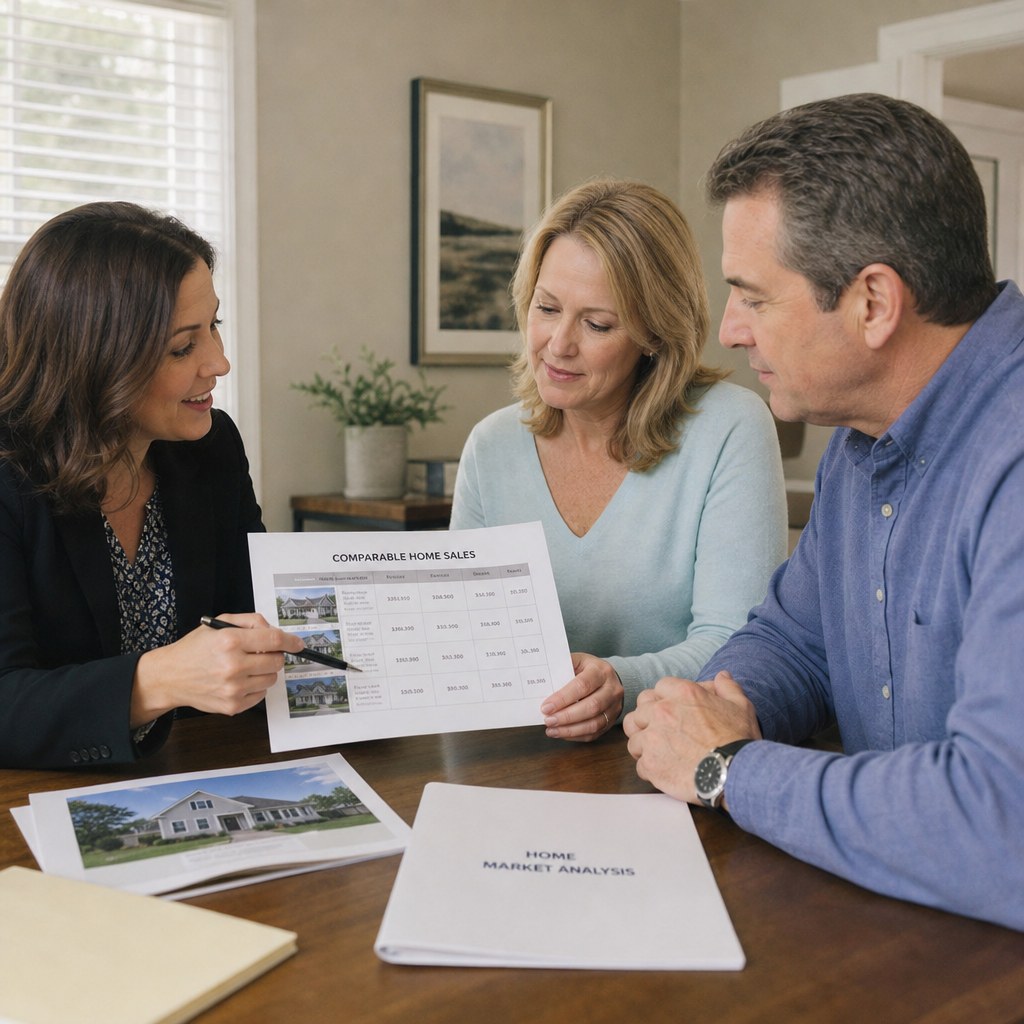
A strong pricing process usually includes:
- Recent sold comps: Focus on homes that actually closed, not just homes that are currently listed.
- Active competition: Review what buyers can choose instead of your home right now.
- Pending sales: These can show where buyer demand is moving, though final prices may not be public yet.
- Home condition: Repairs, dated finishes, curb appeal, layout, and deferred maintenance all affect perceived value.
- Location details: School zones, traffic patterns, views, noise, walkability, and neighborhood boundaries can shift value street by street.
- Market pace: In a fast seller’s market, pricing strategy may differ from a market where inventory is rising and buyers have more leverage.
The most useful number is not always the highest comp. It is the price range where your home looks competitive, credible, and worth touring.
The pricing factors buyers notice first
Buyers often begin with the same basic filters: price, location, square footage, bedrooms, bathrooms, and lot size. Once your home clears those filters, they look more closely at condition, finishes, outdoor space, storage, floor plan, and the cost of future updates. A home with excellent photos but a price that feels out of step with nearby options may still be skipped before a showing is ever scheduled.
Price per square foot can be helpful, but it should not be used alone. Two homes with the same square footage can have very different values if one has a finished basement, updated systems, better natural light, or a more functional layout. Lot shape, usable yard space, garage capacity, and recent renovations can also change how buyers judge value.
Seller emotions can complicate this step. You may remember what you paid, how much you spent on improvements, or how much you need from the sale. Buyers, however, respond to today’s market. They are asking, “What else can I buy for this money?” Your pricing should answer that question objectively.
How do you know if your home is priced correctly?
Your home is probably priced correctly if it earns attention from qualified buyers, receives showings early, compares well against similar listings, and produces feedback that focuses on fit rather than price. If buyers are touring but not making offers, or if online views are not turning into showings, the market may be telling you the price is too ambitious.
Look for measurable signals rather than waiting for a perfect buyer to appear. A well-priced home usually feels aligned with the local market within the first couple of weeks, although timing varies by area and season. If nearby homes are selling while yours sits, the issue may not be marketing alone. See why your house is not selling.
Common signs of overpricing include:
- Low showing activity. Buyers may be seeing the home online but deciding it is not worth visiting.
- Repeated comments about value. Feedback such as “nice, but too high” should be taken seriously.
- Longer days on market than comparable homes. If similar homes sell faster, buyers may be rejecting your price.
- No offers after strong exposure. Good photos, broad listing distribution, and open houses should generate some response if the price fits.
- Multiple price opinions pointing lower. If agents, buyers, and comparable sales all suggest a lower range, that pattern matters.
When you ask, “is my home priced correctly,” avoid relying on reassurance from people who are emotionally invested. Instead, compare your home against real buyer behavior.
A practical step-by-step pricing process
A clear process helps you stay grounded and avoid chasing an unrealistic number. Use these steps before listing, and revisit them if the market shifts.
1. Start with a realistic comp set
Choose homes that are truly comparable. The best comps are usually nearby, recently sold, similar in size, and similar in style. If your home is a three-bedroom ranch, a much larger new-construction home across town is not a useful comparison, even if it supports a price you like.
2. Adjust for meaningful differences
Do not treat every upgrade as a dollar-for-dollar price increase. A renovated kitchen may help your home stand out, but buyers also weigh roof age, HVAC condition, flooring, layout, and neighborhood. Adjustments should reflect what buyers in your area actually value.
3. Compare against active listings
Sold comps show what buyers recently paid. Active listings show what your home must compete against today. If your home is priced at the top of the range, it should also look like one of the strongest options in that range.
4. Review online estimates with caution
Automated valuation tools like the Zestimate can be useful as a reference point, especially when you want a quick starting estimate. Zillow reports that Zestimate accuracy varies depending on whether a home is listed and on available local data; Trulia’s Zillow-sourced page states a nationwide median error rate around 1.9% for on-market homes and 7.5% for off-market homes. (trulia.com) Use these tools to complement, not replace, local professional judgment.
5. Set a pricing range, then choose a strategy
Once you have a range, decide how you want to position the home. Pricing near the middle may attract steady interest. Pricing slightly below a key search threshold may increase exposure. Pricing at the top requires strong justification through condition, location, features, or low competition.
Where appraisals fit into the pricing decision
An appraisal is different from a listing price recommendation. A listing price is a market strategy designed to attract buyers. An appraisal is an opinion of value used in many financed transactions, and lenders have rules around appraiser independence; Fannie Mae states that appraisals ordered or received by borrowers, property sellers, or real estate agents generally may not be used by lenders. (selling-guide.fanniemae.com)
That distinction is important. You can list at any price you choose, but if the buyer is using financing, the home may need to appraise at or near the contract price for the loan to proceed smoothly. If the appraisal comes in lower than the agreed price, the parties may need to renegotiate, the buyer may need to bring additional cash, or the deal could be at risk depending on the contract terms.
Good home appraisal advice is to price with supportable evidence from the beginning. Keep records of improvements, permits when applicable, major system updates, and comparable sales that help explain your price. Your agent can often provide relevant information to the parties involved in the transaction, but the appraiser must still form an independent opinion.
Smart ways to adjust if the price is not working
A price adjustment should not feel like failure. It is a market response. The bigger mistake is ignoring clear feedback until the listing becomes stale and buyers start wondering what is wrong.
If signs of overpricing appear, consider these actions:
- Refresh the market price analysis. New listings, pending sales, and closed sales can change your competitive position.
- Separate price problems from presentation problems. If buyers like the price but dislike the condition, staging, cleaning, repairs, or better photos may help.
- Act before momentum fades. Smaller, timely adjustments often work better than waiting too long and making a larger cut later.
- Recheck search brackets. A small change can place your home in front of a different pool of buyers.
- Listen for patterns in feedback. One opinion is just one opinion. Repeated comments are market information.
For example, if several buyers say the home feels dark and dated, you may combine a modest price adjustment with fresh paint, improved lighting, and updated photos. If feedback is consistently about price compared with a renovated listing nearby, cosmetic changes alone may not solve the issue.
Common pricing mistakes to avoid
Many sellers begin with a price that reflects hope rather than evidence. That can reduce urgency among buyers and make later reductions feel more dramatic than they need to be. The better approach is to enter the market with confidence, clarity, and a number you can defend.
Avoid these common mistakes:
- Pricing based on what you need to net. Your financial goal matters, but buyers respond to market value.
- Using one online estimate as the answer. Automated tools are helpful references, not complete valuations.
- Overvaluing personal improvements. Custom choices may not appeal to every buyer.
- Ignoring condition. Buyers often mentally subtract repair and update costs from the price they are willing to offer.
- Following the highest suggested list price automatically. A high recommendation is only useful if it is supported by strong data.
The strongest home pricing tips are often the simplest: compare honestly, price strategically, and respond quickly to feedback.
The takeaway
Learning how to price your home means learning how buyers, agents, lenders, and appraisers view value. Start with comparable sales, weigh current competition, use online estimates carefully, and stay alert to early market signals. A well-supported price helps your home attract the right buyers, reduce unnecessary stress, and move through the selling process with fewer surprises.
Find Out What Your Home Could Sell For
Get a free home valuation to see where your home may fall in today’s market, then learn how Sell For Mor works to price, market, and sell it.
Free. No obligation to sell.
Keep reading: home selling timeline, essential checklist for selling a house, and signs your house will sell fast.
This article is general information, not legal advice. Sell For Mor is powered by Rise Realty, DRE #01957687.