
A realistic home selling timeline is more than the number of days your property sits online. Most sellers need time to prepare the home, choose a pricing strategy, launch the listing, negotiate an offer, complete inspections and appraisal, close, and move. In many ordinary sales, the full timeline for selling a house is best planned in months, not days, especially if the buyer is using mortgage financing.
How long does it take to sell a house from start to finish?
From the first serious decision to sell through closing, a practical house selling timeline often lands around three to five months. The listing period alone can vary widely by market, but Realtor.com reported that U.S. homes spent a median of 61 days on the market in September 2026, while mortgage-backed transactions also need time for loan processing after an offer is accepted. (mediaroom.realtor.com) For more, see our guide on how long it takes to sell a house.
That does not mean every home takes the same path. A well-priced house in a desirable neighborhood may attract an offer quickly, while a home needing repairs, sitting in a slower price tier, or facing limited buyer demand may take longer. The safest way to plan is to separate the process into three phases: pre-listing preparation, active marketing, and contract-to-close.
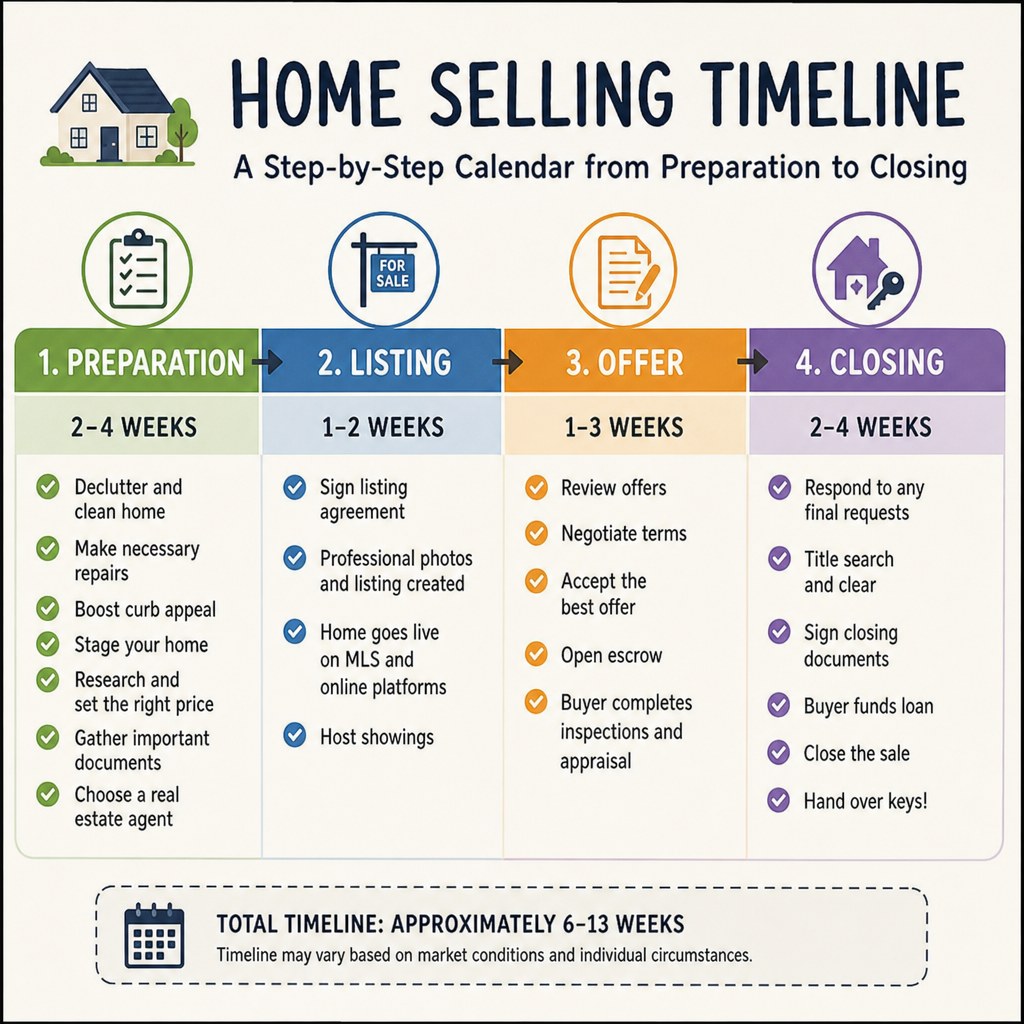
The timeline usually begins before the listing goes live
One common source of confusion is the phrase “how long does it take to list a house.” Technically, a listing can be entered into the market quickly once photos, pricing, paperwork, and marketing copy are ready. Practically, getting to that point can take two to eight weeks or more, depending on the condition of the home and how much decision-making is required.
During this phase, sellers usually interview agents, review market data, decide what to repair, declutter, clean, stage, gather documents, and prepare for photos. NAR’s 2025 Profile reported that 91% of home sellers used a real estate agent or broker, which reflects how often sellers want help with pricing, marketing, negotiation, and process management. (nar.realtor)
A simple pre-listing plan might look like this:
- Week 1: Clarify your goal, timing, and minimum acceptable terms. Interview agents if you plan to use one.
- Weeks 1–3: Review comparable sales, choose a pricing strategy, and decide which repairs are worth doing.
- Weeks 2–5: Declutter, clean, complete light repairs, improve curb appeal, and start packing nonessential items.
- Week 4 or later: Stage or rearrange rooms, schedule photography, approve listing details, and prepare for showings.
The more you can do in parallel, the smoother the process feels. For example, you can pack seasonal items while repairs are underway, request contractor estimates while interviewing agents, and gather payoff statements or HOA documents before a buyer asks for them. Our home selling checklist and the post Essential Checklist for Selling Your House cover each task.
A realistic step-by-step real estate timeline
The following real estate timeline gives a practical overview of the major stages. Your exact timing will depend on your local market, your price point, buyer financing, inspection findings, and how quickly everyone responds to requests.
| Stage | Typical timing | What happens |
|---|---|---|
| Planning and agent selection | A few days to two weeks | You define your goal, compare selling options, and choose who will help manage the sale. |
| Prep, repairs, and staging | Two to eight weeks or more | You make the home easier to market, photograph, and show. |
| Listing launch | A few days once ready | Photos, description, pricing, disclosures, and marketing go live. |
| Active market time | Several weeks or longer | Buyers tour, ask questions, compare alternatives, and submit offers. |
| Offer negotiation | A day to a week or more | Price, contingencies, closing date, credits, and possession terms are negotiated. |
| Inspection and appraisal | Often within the contract period | The buyer investigates the property and the lender confirms value if financing is involved. |
| Closing | Commonly several weeks after contract | The lender, title company, agents, and parties complete final requirements. |
| Move-out or possession | At closing or negotiated separately | You deliver possession, or negotiate extra time through a written agreement. |
This home selling guide works best when treated as a planning framework rather than a promise. If you are selling and buying at the same time, build your calendar around both transactions, not just your sale (see buy before you sell). A smooth new home sales flow depends on aligning your listing date, offer deadline, buyer contingencies, purchase contract, loan approval, closing date, and moving logistics.
What affects the speed of the sale?
The biggest timing factors are pricing, condition, market demand, financing, and communication. You cannot control every variable, but you can reduce avoidable delays by making decisions early and responding quickly once the home is under contract.
Pricing is usually the first lever. A home priced close to current comparable sales is easier for buyers to evaluate; an overpriced home may sit long enough that buyers begin wondering what is wrong with it. If your priority is speed, your pricing strategy should reflect that from day one rather than after several quiet weeks.
Condition also matters. Buyers may overlook cosmetic issues in a tight market, but obvious deferred maintenance can slow negotiations or trigger inspection credits. A pre-listing inspection can be useful when you want fewer surprises, though it is not right for every situation.
Financing is another major variable. Cash buyers can often close faster because there is no mortgage underwriting or lender appraisal requirement, but cash offers may come with trade-offs in price or terms. For financed buyers, ICE Mortgage Technology reported in a 2025 Mortgage Monitor that average purchase loans closed 41 days after application in a recent May period, giving sellers a useful benchmark for the contract-to-close stage. (ice.com)
Market conditions set the backdrop. In a seller’s market, limited inventory can create urgency and shorten the time to an offer. In a buyer’s market, shoppers have more options, so presentation, pricing, and flexibility carry more weight. Realtor.com’s September 2026 housing report also noted elevated price cuts and more available inventory, a reminder that national conditions can shift even when your local neighborhood behaves differently. (mediaroom.realtor.com) Timing the season matters too; see the best time to sell a house in California.
How can you speed up the home selling timeline?
You speed up the home selling timeline by removing friction before buyers encounter it. That means pricing realistically, preparing the home before launch, setting expectations with your agent, and making key documents easy to access.
Use this checklist to keep the timeline moving:
- Choose your priority early. Decide whether speed, price, certainty, or convenience matters most. You may not maximize all four.
- Price for the market you are in, not the market you wish existed. Recent comparable sales, active competition, and buyer feedback should guide adjustments.
- Handle obvious objections before photos. Repair small visible issues, refresh high-traffic areas, and remove clutter that makes rooms feel smaller.
- Make showings easy. Limited showing windows can reduce buyer traffic and slow momentum.
- Prepare disclosures and documents. HOA information, permits, warranties, utility details, and repair records can prevent back-and-forth delays.
- Discuss contingencies upfront. Inspection, appraisal, financing, sale-of-home, rent-back, and possession terms all affect certainty and timing.
- Respond quickly during escrow. Slow replies to repair requests, title questions, or closing documents can turn minor issues into missed deadlines.
The goal is not to rush blindly. It is to create a sale process where buyers have confidence, your agent has clear instructions, and each next step is ready before it becomes urgent. If speed is the priority, read our guide to selling a house fast in California.
Planning for closing and moving day
Once you accept an offer, the process becomes more deadline-driven. The buyer may schedule inspections, the lender may order an appraisal, the title or escrow company may request information, and both parties may negotiate repairs or credits. This is often the stage where sellers feel the most pressure because the home feels “sold,” but the transaction is not final yet.
Your move-out plan should be discussed before you sign the purchase agreement. Some sellers move before closing, while others need possession for a short period afterward. If you need extra time, the agreement should spell out rent-back terms, insurance expectations, deposits, utilities, and the exact date possession transfers.
If you are buying another home, map both closings on one calendar. Build in space for lender delays, final walk-throughs, wire transfers, movers, cleaning, and temporary housing if dates do not line up. This is where a clear timeline for selling a house becomes more than a real estate exercise; it becomes a life logistics plan.
The takeaway for sellers
A strong home selling timeline starts with honest planning. Give yourself time to prepare, price the home for current conditions, and understand that the days on market are only one part of the total process. The best timeline is not always the fastest one; it is the one that supports your financial goal, moving needs, and tolerance for uncertainty.
If you are early in the process, start with three questions: When do you need to be moved? How flexible can you be on price and terms? What needs to happen before your home is photo-ready? Answer those clearly, and the rest of your house selling timeline becomes much easier to manage.
Start Your Timeline With a Free Valuation
Knowing what your home may be worth is the first step in any timeline. Get a free home valuation, then see how Sell For Mor works.
Free. No obligation to sell.
Keep reading: signs your house will sell fast, what a quick sale means, and how to sell a house in California.
This article is general information, not legal advice. Sell For Mor is powered by Rise Realty, DRE #01957687.