Riverside is a practical Southern California city for people who want more space, a strong local identity, access to universities and jobs, and a lower housing barrier than many coastal markets. The answer is not the same for everyone: Riverside California living can feel rewarding if you value historic neighborhoods, mountain views, and Inland Empire convenience, but less ideal if you need cool coastal weather, short Los Angeles commutes, or consistently clean air.
Is Riverside, California a good place to live in 2026?
Yes, Riverside can be a good place to live in 2026, especially for families, students, healthcare workers, university employees, remote workers, and buyers priced out of coastal Southern California. The city had an estimated 323,057 residents in 2025, giving it the scale of a true midsize city without feeling as dense as Los Angeles or Orange County. It also has major anchors such as UC Riverside, Riverside City College, local government, healthcare, logistics, and retail, which help support everyday life and employment options. (census.gov) See our Riverside County guide and Riverside housing market page.
Still, the question “is Riverside a good place to live” depends heavily on your commute, budget, and heat tolerance. Living in Riverside CA often works best when your job, school, or family network is in the Inland Empire rather than deep in Los Angeles or coastal Orange County. It is a city with real advantages, but it asks you to accept traffic, hot summers, and regional air-quality concerns.
Riverside has a distinct Inland Empire lifestyle
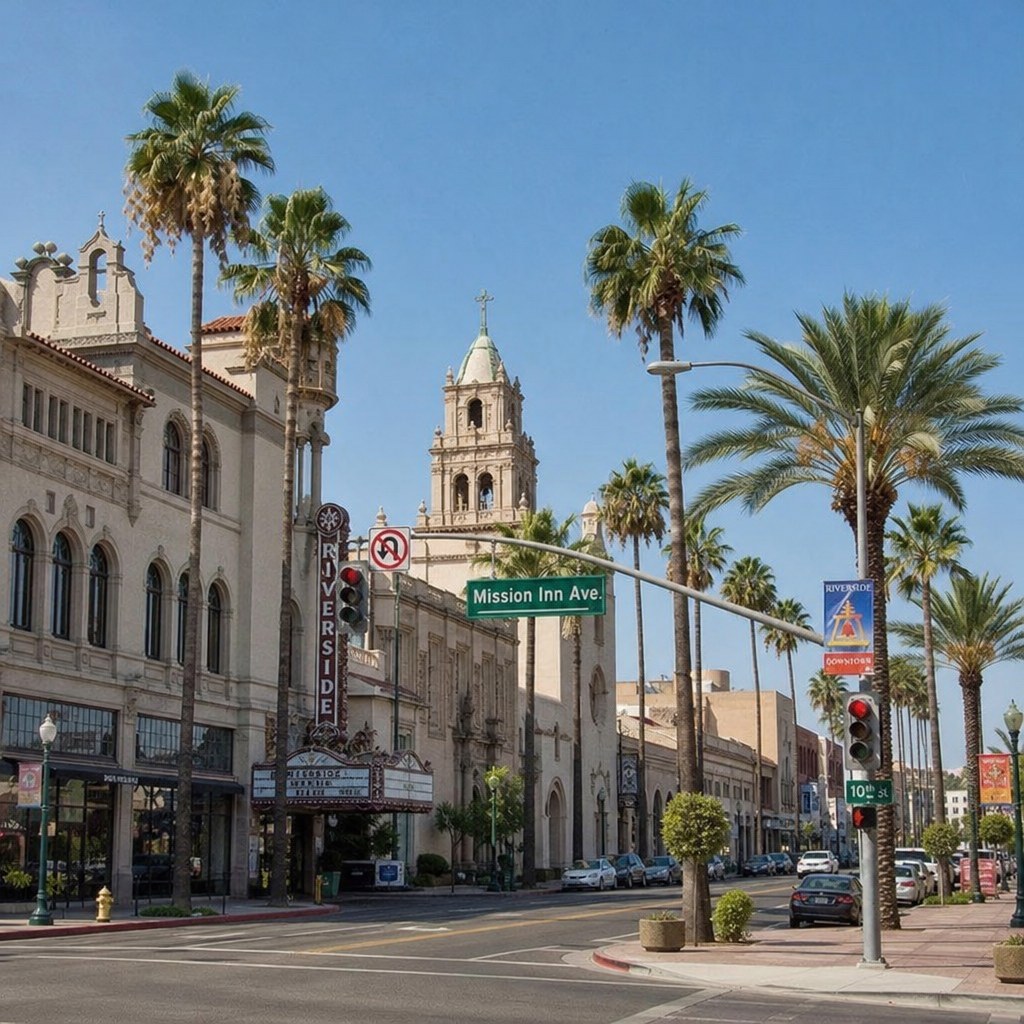
Riverside is not a beach city, a desert resort, or a Los Angeles suburb in disguise. It has its own civic identity built around citrus history, higher education, older neighborhoods, newer subdivisions, and a downtown arts and culture district. The city promotes downtown galleries, performances, festivals, nightlife, scenic attractions, and entertainment as part of its lifestyle appeal. (riversidebusiness.org)
That mix is why people ask both “is Riverside California a good place to live” and “is Riverside California a nice place to live.” The answer is often yes if you like a grounded, less flashy version of Southern California. You can spend a Saturday morning hiking Mount Rubidoux, meet friends downtown, shop near Tyler, or head toward the mountains, desert, or coast on a day trip.
How expensive is living in Riverside, CA?
Living in Riverside is usually more affordable than many coastal Southern California communities, but it is not cheap. Housing is the biggest filter: Zillow reported a typical Riverside home value of $641,514 through September 30, 2026, while RentCafe listed average apartment rent at $2,269 as of September 30, 2026. Census data from 2020–2024 shows a median household income of $91,045 and median gross rent of $1,914, which helps explain why some households find Riverside manageable while others still feel squeezed. (zillow.com)
For buyers, Riverside may offer more house for the money than coastal markets, but mortgage payments can still be high once taxes, insurance, utilities, and maintenance are included. For renters, apartment prices vary widely by neighborhood, unit age, amenities, and commute access. If you are comparing Riverside to San Bernardino, Moreno Valley, Corona, Anaheim, or Ontario, run the numbers at the neighborhood level rather than assuming the whole city fits one price point. For lower-cost options statewide, see the cheapest places to live in California.
A realistic 2026 budget should include:
- Housing: rent or mortgage, plus deposits, HOA dues, insurance, and utilities.
- Transportation: gas, insurance, maintenance, parking, tolls, or transit passes.
- Cooling costs: summer air-conditioning can matter more inland than near the coast.
- Childcare and school needs: costs vary depending on public, charter, private, or after-school options.
- Commute trade-offs: a cheaper home can become less attractive if it adds hours on the road.
Jobs, schools, and universities give Riverside staying power
Riverside benefits from being more than a bedroom community. The county’s major-employer list includes the County of Riverside, Amazon, UC Riverside, March Air Reserve Base, the State of California, Kaiser Permanente, Riverside Unified School District, the City of Riverside, and Riverside Community College District among large regional employers. That mix creates opportunities in education, healthcare, government, logistics, public service, and retail. (rivcoed.org)
Education is also a major part of Riverside California living. UC Riverside gives the city a university presence, while Riverside City College, California Baptist University, school districts, and workforce partnerships add to the local education network. Census data shows 25.7% of Riverside residents age 25 and older had a bachelor’s degree or higher in 2020–2024, so the city has a broad mix of college students, skilled workers, tradespeople, families, and long-time residents. (census.gov)
If you are moving with children, do not judge the entire city by one school rating. Riverside is large enough that school experience can vary by address, program, commute, and student needs. Tour campuses, review district boundaries, ask about after-school care, and talk to parents in the specific neighborhood you are considering.
Transportation is convenient but commute-sensitive
Riverside sits near major Southern California routes, which makes it useful for regional travel but vulnerable to traffic. The city connects to the broader Inland Empire and beyond through freeways, local bus service, commuter rail, and regional transit hubs. Riverside Transit Agency schedules include routes serving UCR, Downtown Riverside, Galleria at Tyler, La Sierra Metrolink Station, Vine Street Mobility Hub, Anaheim, Disneyland, Ontario Mills, and other regional destinations. (web.riversidetransit.com)
Census data places Riverside’s mean travel time to work at 31.3 minutes for 2020–2024 workers, but that average can hide very different realities. Someone working at UCR, a hospital, a school, or a local office may have a reasonable daily routine. Someone commuting to West Los Angeles, Irvine, or coastal Orange County may face a much harder schedule.
Before committing to a lease or purchase, test the commute during the actual hours you will travel. Do it on a weekday, in both directions, and include school drop-off or parking if that applies. For many people, the answer to “is Riverside CA a good place to live” changes completely once commute time is added to the decision.
Outdoor access and local culture are real strengths
Riverside offers more outdoor access than many people expect. Mount Rubidoux Park, just west of downtown, covers 161 acres and includes paved roads plus dirt hiking trails; the city notes that many people walk, jog, and bike there during open hours. Fairmount Park, the Santa Ana River Trail, Sycamore Canyon, local sports facilities, and nearby mountain and desert destinations add to the area’s appeal. (riversideca.gov)
The city also has a strong sense of place. Historic architecture, citrus heritage, college energy, public art, community events, and locally owned restaurants all help Riverside feel more established than some newer Inland Empire communities. If you like neighborhoods with character, mature trees in some areas, and a downtown that is not just a shopping center, living in Riverside may feel more interesting than living in a newer master-planned suburb.
What are the downsides of living in Riverside?
The main downsides are heat, traffic, air quality, uneven neighborhood conditions, and housing costs that are still high compared with many U.S. cities. Riverside County ranked second among the most polluted counties for ozone in the American Lung Association’s 2026 State of the Air report, and the county received failing grades across ozone and particle-pollution measures in the report’s state table. That does not mean every day is unhealthy, but it does mean people with asthma, heart or lung conditions, young children, or outdoor jobs should take air quality seriously. (lung.org)
Safety is also neighborhood-specific. The Riverside Police Department provides crime statistics and mapping resources, but it cautions that its database is continuously updated and represents a specific extraction point in time. That makes it smart to check current maps, visit at different times of day, and talk with nearby residents before choosing a block. (riversideca.gov) For the numbers, read our post on whether Riverside is safe.
Riverside is a good fit for some movers more than others
Riverside is likely a strong fit if you want:
- A Southern California city with more attainable housing than many coastal areas.
- Access to universities, healthcare, government, logistics, and education jobs.
- A real downtown, historic character, and local arts and culture.
- Hiking, parks, and day-trip access to mountains, desert, beaches, and Los Angeles.
- A family-oriented environment with suburban neighborhoods and city amenities.
It may not be the best fit if you need:
- Cool coastal weather year-round.
- A short daily commute to central Los Angeles or far coastal job centers.
- The lowest possible housing costs in the Inland Empire.
- A highly walkable, car-light lifestyle in every neighborhood.
- Cleaner regional air than inland Southern California typically provides.
The bottom line
So, is Riverside California a good place to live in 2026? For many people, yes—especially if your work, school, or lifestyle already points toward the Inland Empire. Riverside offers space, history, education anchors, job diversity, parks, and cultural life in a location that still connects to the rest of Southern California.
The best move is to treat Riverside as a city of neighborhoods, not a single yes-or-no answer. Compare housing costs, test your commute, check current crime and air-quality resources, and spend time in the areas you are considering. If those pieces line up, living in Riverside can be a balanced and rewarding choice. Ready to buy? Read how to buy a house in California.
Selling a Home in Riverside County?
Get a free home valuation to see what your home may be worth, then learn how Sell For Mor’s four specialists handle marketing, pricing, selling, and negotiating. See selling a house in Riverside and how it works.
Free. No obligation to sell.
Keep reading: best places to live in California and best time to sell a house in California.
This article is general information, not financial or legal advice. Prices, rents and conditions change; verify current data for any area you consider. Sell For Mor is powered by Rise Realty, DRE #01957687.