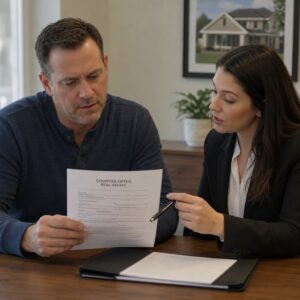
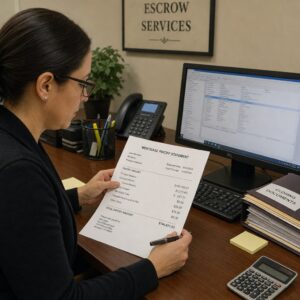
Escrow in real estate is a neutral holding process that protects the buyer and seller while a property sale moves from accepted offer to closing. In California, escrow usually involves an independent escrow holder or escrow officer who follows written instructions, holds money and documents, and releases them only when the agreed conditions are met. For most residential transactions, escrow commonly takes about 30 to 45 days, though the exact length depends on the contract, financing, title work, and contingencies. For the full timeline, see how long escrow takes in California.
What is escrow in real estate?
Escrow is the process of placing important items with a neutral third party until the buyer and seller have satisfied the terms of their real estate agreement. In simple terms, escrow keeps the transaction organized and prevents either side from handing over money, ownership documents, or other valuable items too early.
A California real estate escrow commonly includes three core elements: a purchase agreement, written escrow instructions, and a neutral escrow holder. The escrow holder does not represent the buyer or the seller as an advocate. Instead, the holder follows the parties’ written instructions and helps coordinate the safe exchange of funds, documents, and title-related paperwork. California regulators describe escrow as a process where documents, funds, or other things of value are deposited with a neutral and disinterested third party. (dre.ca.gov)
Items typically held in escrow include:
- Earnest money, which is the buyer’s good-faith deposit under the purchase contract.
- Funds, including closing funds, loan proceeds, credits, prorations, and amounts needed to pay approved closing costs.
- Documents, such as escrow instructions, the deed, lender documents, title-related forms, disclosures, and signed closing paperwork.
- Other transaction items, when applicable, that must be held until a specific condition is satisfied.
The key idea is conditional delivery. Money and documents are not simply handed over because an offer was accepted. They are held until the contract requirements are met, then distributed according to the escrow instructions.
How escrow works in California
When people ask what escrow is in California, they are usually asking how the state’s closing process is different from a casual handshake or a direct exchange between buyer and seller. In a California sale, escrow acts as the central coordination point after the purchase agreement is signed. The escrow holder receives instructions, collects deposits and documents, works with the title side of the transaction, tracks required signatures, accounts for funds, and prepares for closing.
Escrow does not decide whether the buyer should remove contingencies, whether the seller should accept a repair request, or whether either side is making a good financial decision. Those are decisions for the parties, often with guidance from their real estate, lending, tax, or legal professionals. Escrow’s role is more limited and more precise: follow the written instructions and handle the exchange only when the stated conditions have been satisfied. Contingencies such as inspections are covered in our guide to the home inspection contingency.
In a typical California transaction, escrow helps coordinate:
- Opening the file after the purchase agreement is accepted and escrow instructions are prepared.
- Receiving the buyer’s deposit and tracking it as part of the transaction accounting.
- Collecting signed documents from the buyer, seller, lender, and other involved parties.
- Managing closing figures so debits, credits, fees, payoff amounts, and prorations are reflected in the settlement.
- Coordinating final conditions before documents are recorded and funds are disbursed.
This is not a day-by-day timeline, because each transaction has its own details. The practical takeaway is that escrow is the controlled middle stage between agreement and closing.
What is an escrow officer?
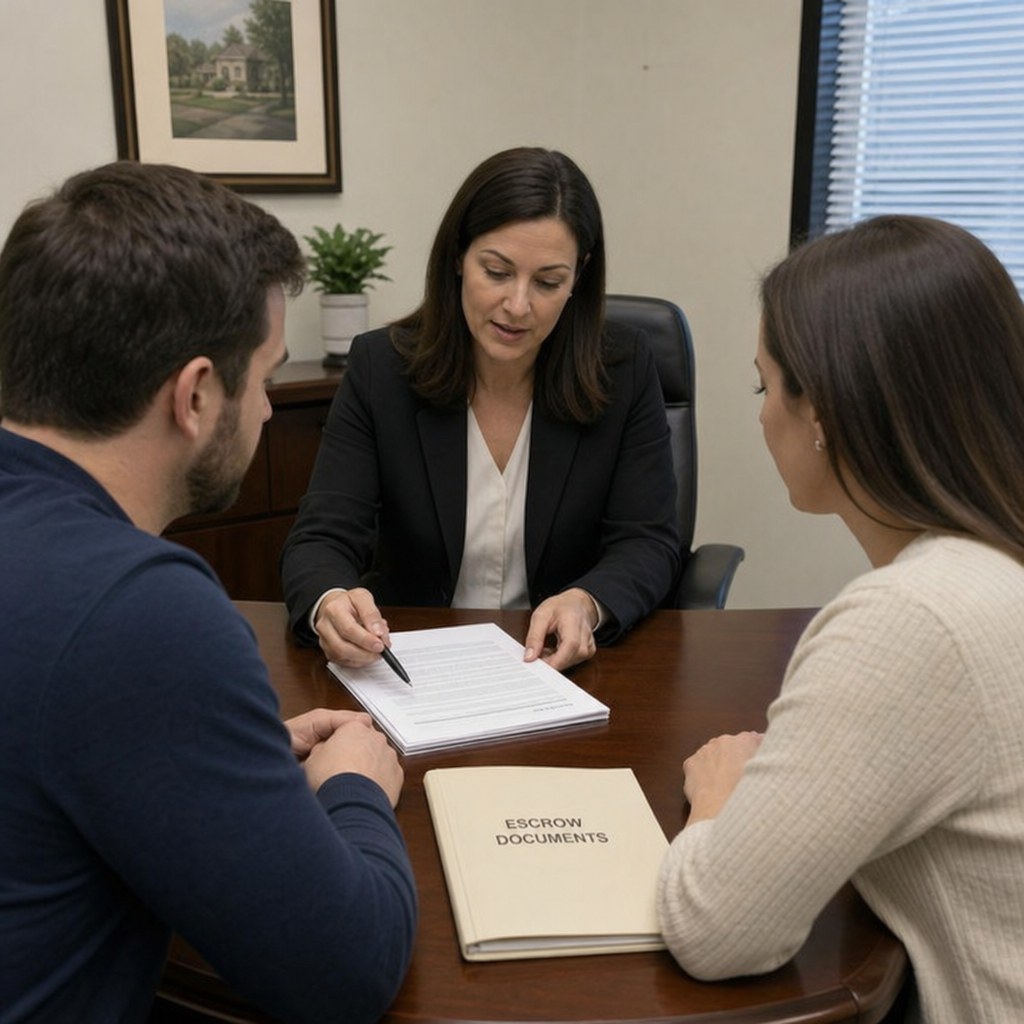
An escrow officer is the person who manages the escrow file for the neutral escrow holder. The escrow officer’s job is to carry out the written instructions, communicate with the parties and related professionals, request and organize documents, prepare settlement paperwork, account for funds, and coordinate the closing steps.
A good way to understand the role is to think of the escrow officer as a neutral transaction administrator, not a negotiator. The officer can explain escrow procedures, identify missing items, request signatures, and tell the parties what is needed to close. The officer should not take sides or rewrite the parties’ deal unless properly instructed by the parties.
Escrow officers commonly work with:
- Buyers and sellers
- Real estate agents
- Lenders
- Title professionals
- Payoff lenders
- Homeowner associations, when relevant
- County recording offices
This neutral role is one reason escrow protects both sides. The buyer does not have to release funds directly to the seller before ownership transfer conditions are met. The seller does not have to transfer title without a controlled process for receiving the agreed payment.
Escrow protects both buyers and sellers
Escrow protects buyers and sellers by creating a structured, neutral process for exchanging value. Without escrow, the buyer might worry that funds could be released before the deed, title, or contract conditions are handled. The seller might worry that signed documents could be delivered without reliable payment.
For buyers, escrow helps protect the deposit and closing funds by holding them under the transaction instructions. It also gives the buyer a formal process for satisfying contract requirements, such as financing, title review, disclosures, inspections, and other agreed conditions. The exact rights and deadlines come from the purchase agreement, not from escrow alone.
For sellers, escrow helps confirm that buyer funds, lender documents, and closing requirements are being coordinated before ownership changes hands. It also helps organize seller payoffs, signed transfer documents, prorations, and authorized disbursements. When the transaction closes, the seller receives proceeds through the agreed process rather than through an informal exchange.
Defining characteristics of escrow include:
- Neutrality: the escrow holder does not act as the buyer’s or seller’s personal advocate.
- Written instructions: escrow follows contract terms and escrow instructions, not verbal assumptions.
- Conditional release: money and documents are released only when required conditions are met.
- Accounting control: deposits, payoffs, credits, and closing costs are tracked in the file.
- Document coordination: signed paperwork is gathered and routed for closing and recording.
Escrow does not remove every risk from a real estate transaction. It does, however, reduce the risk of premature payment, premature transfer, missing paperwork, and confusion over who is supposed to do what.
Who pays escrow fees in California?
In California, who pays escrow fees is usually a matter of customary practice and negotiation, not one simple statewide rule. It is customary in many California transactions for the buyer and seller to split the escrow fee, but local customs vary between regions and counties, and the purchase agreement can assign costs differently. The California Department of Real Estate notes that splitting the escrow fee between buyer and seller is customary, while also recognizing that Northern and Southern California practices can differ. (dre.ca.gov)
That means buyers and sellers should not assume the fee split based only on what a friend paid in another county. One area may commonly split escrow fees, another may customarily assign certain costs to the seller, and another may handle title and escrow allocations differently. The controlling point is what the parties agree to in the purchase contract and closing instructions.
Escrow fees are separate from other closing costs, such as title insurance charges, lender charges, recording fees, transfer taxes, loan payoffs, prorated property taxes, and other transaction-specific expenses. For a breakdown, read who pays closing costs in California and seller closing costs in California. Both sides should review the cost allocation in the offer, counteroffer, escrow instructions, and closing statement before signing.
The seller’s role during California escrow
Sellers have an active role during escrow, even though the escrow officer coordinates the file. In California, the seller typically signs escrow instructions and transfer documents, provides required disclosures, responds to agreed contract obligations, reviews payoff information, works through title issues if they arise, and prepares to deliver the property according to the contract.
A seller’s escrow responsibilities may include:
- Signing escrow and title documents accurately and on time.
- Providing required seller disclosures and property-related forms.
- Reviewing payoff demands for existing loans, liens, or assessments that must be cleared through closing.
- Cooperating with title requirements if a document, name issue, lien, or ownership question needs attention.
- Responding to buyer requests that arise under the contract, such as agreed repairs or documentation.
- Confirming closing figures before proceeds are distributed.
- Maintaining communication with the escrow officer and real estate professionals so missing items do not delay closing.
Sellers should read documents carefully and ask questions early if something looks incorrect. A misspelled name, outdated vesting information, unresolved lien, or missing signature can slow the transaction. Escrow can help coordinate the fix, but the seller often must provide the information or authorization needed to resolve it. If a lien is involved, see selling a house with a lien in California.
Common examples and misconceptions
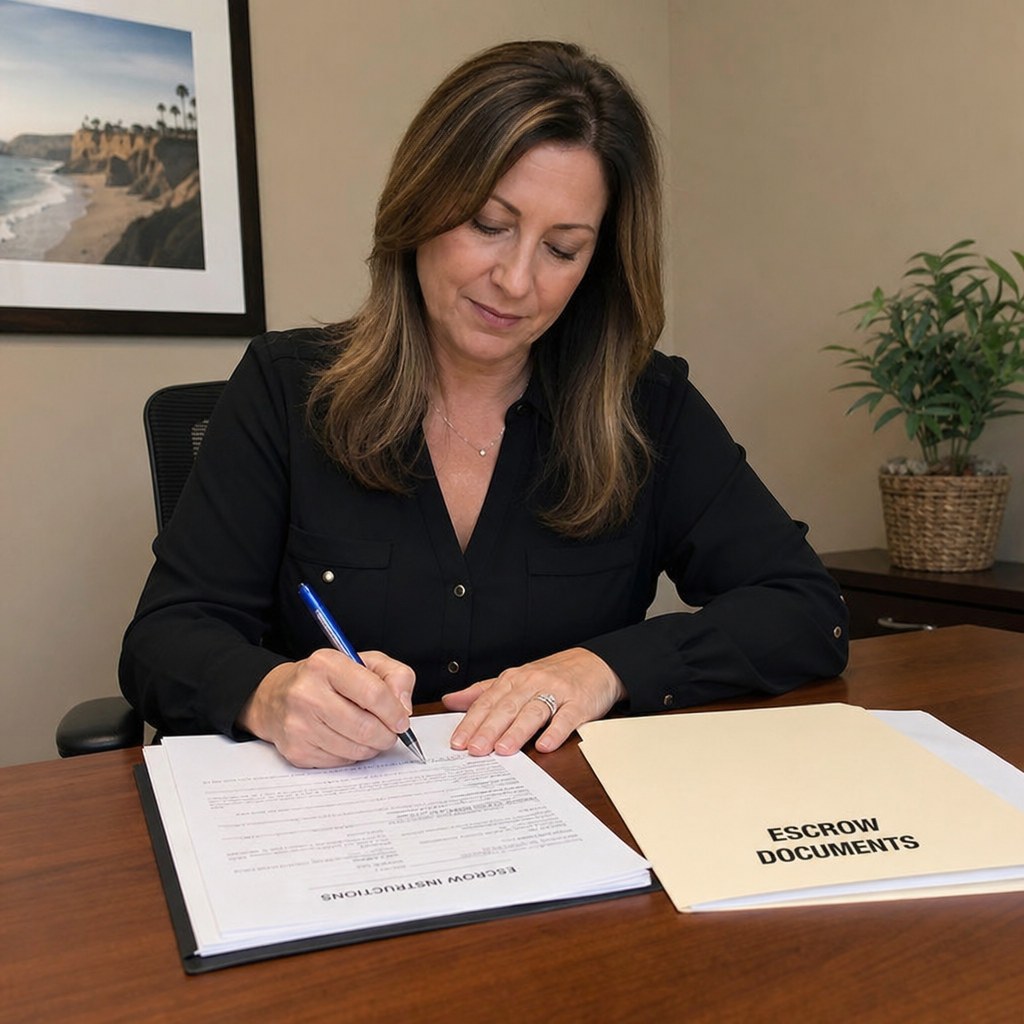
Escrow becomes easier to understand when you separate what it does from what people sometimes assume it does. It is a neutral holding and coordination process, not a guarantee that every issue in the deal will disappear.
- Example: earnest money deposit. The buyer’s deposit is delivered into escrow and held under the contract terms rather than paid directly to the seller at the start.
- Example: signed deed. The seller may sign transfer documents before closing, but those documents are not handled as a casual handoff; they are managed through the closing process.
- Example: loan funds. When financing is involved, lender funds are coordinated through escrow as part of the final settlement.
- Misconception: escrow makes decisions for the parties. Escrow follows instructions; it does not decide who is right in a dispute.
- Misconception: escrow fees are always paid by one side. In California, the payment of escrow fees depends on custom, negotiation, and the contract.
- Misconception: escrow is the same as a mortgage impound account. A purchase escrow is the closing process for a sale. A mortgage impound account is used after closing to collect money for items such as property taxes or insurance.
Thinking about selling your California home?
Get a free, no-pressure estimate of your home value and what you could net after escrow and closing costs.
Free. No obligation to sell.
Wire fraud is a serious escrow risk
Wire fraud is one of the most important risks to watch for during escrow. Criminals may send fake emails, impersonate trusted parties, or provide altered wire instructions to divert closing funds. Federal consumer guidance warns that scammers can pose as a real estate agent, settlement agent, title company, escrow officer, or attorney during the closing process. (consumerfinance.gov)
Never rely only on an email that changes wiring instructions or pressures you to act immediately. Before sending money, verify wire instructions using a trusted phone number obtained independently, not a number copied from a suspicious message. If funds are sent to the wrong account, recovery can be difficult, so caution before wiring is far better than trying to fix the problem afterward.
Escrow is designed to bring order, neutrality, and protection to a real estate closing. Buyers and sellers still need to read their documents, understand their obligations, verify payment instructions, and communicate promptly. When used correctly, escrow gives both sides a safer way to move from agreement to completed sale.
Keep reading: How long escrow takes in California · Who pays closing costs · Home selling timeline · How selling with Sell For Mor works
This article is general information, not legal advice. Practices vary by region and contract. Sell For Mor is powered by Rise Realty, DRE #01957687.