A judgment lien is a legal claim that can attach to real estate after a court decides someone owes money. In California, it commonly becomes a real property lien when the judgment creditor records an abstract of judgment with the county recorder in a county where the debtor owns property. For a homeowner, the practical issue is simple: the lien can block or delay a sale or refinance until it is paid, settled, released, expired, or otherwise cleared.
What is a judgment lien?
A judgment lien is an involuntary lien created after a money judgment, not because the homeowner agreed to pledge the property as collateral. In California, the creditor typically gets an Abstract of Judgment, has it issued by the court clerk, and records it with the county recorder’s office in the county where the debtor owns real estate; once recorded, it can create a lien against the judgment debtor’s real property in that county. (selfhelp.courts.ca.gov)
If you are wondering what type of lien a judgment is considered to be, the usual answer is that it is an involuntary, non-consensual lien. It is also often described as a general lien because it is tied to the debtor and can attach to real property the debtor owns in the recorded county, rather than only to one specific property by agreement.
California court materials explain that this type of real property lien can prevent a debtor from selling or refinancing without first paying the judgment. The lien generally lasts 10 years, the same general period as the judgment, and the judgment may be renewed before expiration; liens may also need renewal steps at the recorder’s office to continue their effect. (courts.ca.gov)

Judgment liens, mortgage liens, and tax liens are different tools
A judgment lien is different from a mortgage lien because a mortgage or deed of trust is usually voluntary. When a borrower finances a home, they agree that the lender has a security interest in the property. The lien is part of the loan arrangement, and the borrower expects it to be paid off when the home is sold or refinanced.
A judgment lien usually comes later, after a lawsuit, collection case, or other court process results in a money judgment. The homeowner may not think of the house as collateral, but once the abstract is properly recorded, the lien can affect real estate owned in that county. That is why judgment liens often surprise sellers during a title search. See our guide to selling a house with a lien in California.
Tax liens are different again. They arise from unpaid taxes and are created under tax collection laws, not ordinary civil judgment collection rules. Some government tax-related judgments or tax liens can have special procedures, priority rules, release requirements, and agencies involved, so they should not be treated exactly like a private creditor’s judgment lien. A recorded lawsuit notice is a separate item, covered in what is a lis pendens.
How a judgment lien affects selling or refinancing in California
A judgment lien affects a sale or refinance because it appears as a title issue. A buyer, buyer’s lender, or refinance lender generally wants clear title, so the title company will usually require the judgment lien to be paid off, released, bonded around, removed, or otherwise resolved before closing.
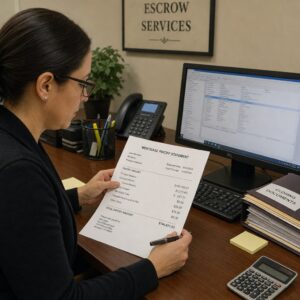
In a sale, the lien does not always mean the transaction is impossible. More often, it means the lien must be handled through escrow. The title company identifies the lien, requests payoff information, confirms the creditor’s release requirements, and makes sure the closing documents address the lien. See what is escrow in real estate and what a payoff statement is.
If there is enough equity, escrow commonly pays the judgment lien from the seller’s proceeds during closing. In practical terms, the seller does not always need to pay the lien out of pocket before listing; the payoff can be deducted from sale proceeds if the title company, escrow holder, creditor, and transaction documents all line up. California court collection materials specifically note that when the debtor tries to refinance or sell, the escrow company will first require the judgment to be paid off. (courts.ca.gov)
The problem becomes more complicated when the payoff is disputed, the lien was recorded against the wrong person, the judgment was renewed, the creditor cannot be found, or the sale proceeds are not enough to pay all liens. Those situations may require legal help, payoff negotiation, a court filing, or additional title underwriting review.
How to find judgment liens before they disrupt closing
The county recorder is the key source for recorded real property lien information. To look for a judgment lien, search the county recorder’s records in every California county where the homeowner owns or has owned real estate, using the owner’s full legal name and common name variations. California court guidance directs creditors to record the Abstract of Judgment at the county recorder’s office in the county where the debtor owns real estate. (sucorte.ca.gov)
A careful search may include:
- County recorder records: Search online if available, or request help from the recorder’s office.
- Name variations: Check maiden names, prior names, middle initials, suffixes, and spelling variations.
- Case information: Match the creditor, debtor, court, case number, and recording date.
- Renewal documents: Look for any recorded renewal, not just the original abstract.
- Title report: Review a preliminary title report if a sale or refinance is underway.
Because judgment liens are often indexed by name, mistaken identity can happen. If the lien belongs to someone with a similar name, gather documents that distinguish you from the judgment debtor, such as different addresses, dates, court case details, or identity information requested by the title company.
What are federal and foreign judgment liens?
A federal judgment lien generally involves a judgment entered in a federal civil action. Under federal law, a civil judgment can create a lien on a judgment debtor’s real property when a certified abstract is filed in the manner required for certain federal tax lien notices; federal judgment liens can have different duration and renewal rules than ordinary California state judgment liens. (uscode.house.gov)
People often ask what a federal lien judgment is, but the phrase usually mixes two ideas: a federal judgment and a lien created from that judgment. If one appears on title, do not assume California’s ordinary 10-year state judgment lien rules answer every question. The payoff, release, agency contact, and recording procedure may differ.
People also ask what a foreign judgment lien is. In California real estate discussions, foreign judgment often means a judgment from another state, sometimes called a sister-state judgment, not necessarily a judgment from another country. California court forms recognize entry of a California judgment based on a sister-state judgment, and California case law has explained that merely recording a sister-state judgment does not directly create a California real property judgment lien unless it is first reduced to a California judgment and then handled under California procedures. (selfhelp.courts.ca.gov)
Options for clearing a judgment lien
Clearing a judgment lien usually means proving it no longer has to burden the property. The right path depends on whether the judgment is valid, unpaid, paid, settled, expired, renewed, disputed, or attached to the wrong person.
Common options include:
- Pay the full payoff through escrow. The title company obtains a demand, escrow pays from sale proceeds at closing, and the creditor provides the required satisfaction or release.
- Negotiate a reduced payoff. If the seller lacks enough equity or disputes the amount, the homeowner or representative may ask the creditor to accept less than the full balance in exchange for a release.
- Negotiate a partial release. In some cases, a creditor may agree to release the lien from a specific property while preserving other collection rights. Get any agreement in writing before closing.
- Challenge an error. If the lien names the wrong person, was recorded incorrectly, or should not attach, the homeowner may need title company review, creditor correction, or court assistance.
- Address expiration or renewal. A lien that appears old may still matter if the judgment was renewed properly. California judgments generally must be renewed before 10 years pass, and renewals generally last another 10 years, subject to exceptions. (selfhelp.courts.ca.gov)
When negotiating, ask for a written payoff demand that states the exact amount, deadline, payment instructions, case number, creditor name, and release requirements. If a compromise is reached, the written settlement should say what payment satisfies the judgment or releases the lien, who will sign the satisfaction, who records it, and when.
Selling a home with a lien on title?
Get a free, no-pressure estimate of your home value and see whether your equity can cover the payoff at closing. No obligation.
Free. No obligation to sell.
The homestead exemption may matter, but it is not a shortcut
California’s homestead exemption can protect a certain amount of equity in a primary residence from judgment enforcement. In plain terms, it may limit how much a judgment creditor can reach when trying to force payment from a homeowner’s residence.
However, the homestead exemption does not automatically erase a recorded judgment lien from title, and it does not mean a title company will ignore the lien during a sale or refinance. It may affect enforcement, negotiations, or how proceeds are distributed, but the details depend on the property, occupancy, equity, lien priority, type of judgment, and current law.
Because exemption amounts and procedures can change, homeowners should verify the current California homestead exemption rules for their situation. A title officer can explain title requirements, but legal questions about exemption rights should be reviewed with a qualified attorney.
Recording the satisfaction or release after payment
Paying or settling the judgment is not the final step. The record also needs to show that the lien has been satisfied or released. California courts use Acknowledgment of Satisfaction of Judgment, form EJ-100, to tell the court and others that a judgment has been paid in full or in part; the form can be recorded with the county to release a lien against the debtor’s land. (selfhelp.courts.ca.gov)
After full payment, the judgment creditor is generally expected to complete and file the satisfaction. California court guidance says the creditor must fill out and file the Acknowledgment of Satisfaction of Judgment when fully paid, and if liens were placed on property, the debtor can remove them by filing a certified copy with each county recorder’s office where the lien was recorded. (selfhelp.courts.ca.gov)
A practical closing checklist looks like this:
- Confirm the payoff amount and good-through date.
- Pay through escrow or another documented method.
- Obtain the signed, notarized satisfaction or release.
- File required documents with the court, if applicable.
- Record the certified satisfaction or release with the county recorder.
- Confirm the title company has accepted the release for closing.
- Keep copies of the payoff, settlement agreement, recorded release, and final title documents.
Key takeaways for California homeowners
A judgment lien can turn an old court debt into a real estate closing problem. In California, the lien is commonly created by recording an abstract of judgment in the county recorder’s records, and it can attach to real property the debtor owns in that county. It generally lasts 10 years and may be renewed if the creditor follows the required steps.
The cleanest sale or refinance is one where the lien is identified early, the payoff is confirmed, escrow handles payment from sale proceeds, and the satisfaction or release is recorded promptly. If the lien is disputed, connected to another state or federal court, protected in part by exemption rules, or difficult to match to the correct person, get help before closing pressure builds.
Keep reading: Selling a house with a lien · What is a payoff statement · What is a lis pendens · How selling with Sell For Mor works
This article is general information, not legal advice, and creates no attorney-client relationship. Sell For Mor is powered by Rise Realty, DRE #01957687.