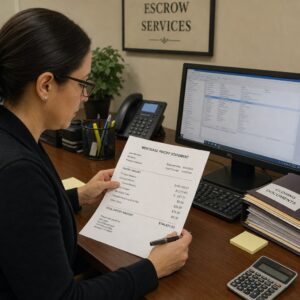

A lis pendens is a recorded notice that a lawsuit may affect the title to, possession of, or certain rights in a California property. For homeowners and sellers, the practical issue is simple: once this notice appears in the county records, buyers, lenders, escrow, and title professionals may treat the property as legally uncertain until the dispute is addressed. This guide explains the lis pendens meaning, how it affects a sale, how to search for one, and common ways it may be removed, without giving legal advice or promising any outcome.
What is a lis pendens on a property?
A lis pendens is the same thing as a notice of pendency of action. In plain English, it is a recorded notice telling the public that a lawsuit has been filed and that the lawsuit includes a real property claim involving the described property. California Code of Civil Procedure section 405.20 allows a party who asserts a real property claim to record this notice in the county where the property is located, and section 405.4 defines that type of claim as one that, if successful, would affect title to, the right to possession of, or certain easement rights involving specific real property. (law.justia.com)
That is the core lis pendens definition: a public real estate notice tied to pending litigation. It does not, by itself, decide who owns the property. Instead, it alerts later buyers, lenders, and other interested parties that a court case could affect the property interest they are evaluating.

When a lis pendens is recorded in California
A lis pendens is generally recorded after a lawsuit has been filed and the lawsuit includes a claim affecting the title or possession of specific California real property. Examples may include disputes over ownership, quiet title claims, specific performance claims involving a purchase contract, partition disputes, or other pleadings that seek a result tied directly to the property itself. The key point for California homeowners is that the lawsuit must involve more than a general disagreement connected to a house; it must include a real property claim within the meaning of California’s lis pendens statutes.
The notice is recorded with the county recorder’s office, not merely filed in the court case. Under California procedures, the claimant generally must also provide notice to affected parties and owners of record before recordation, and a copy is filed with the court after the recording occurs. (law.justia.com)
For buyers and sellers, this matters because recorded documents are part of the public chain of title. A person reviewing the property records may see the notice and understand that the lawsuit could affect future ownership or possession rights.
How a lis pendens clouds title and complicates a sale
A lis pendens can cloud title because it creates a recorded uncertainty about whether the current owner can transfer clear, marketable rights to the next buyer. The notice does not always mean the lawsuit is valid, and it does not always stop a sale in every situation. But it often makes ordinary sale steps harder because buyers, lenders, title insurers, and escrow participants may hesitate when a pending lawsuit appears in the official record.
For a California seller, the practical effects can include:
- Buyer concern: A buyer may worry that the lawsuit could affect ownership after closing.
- Title insurance issues: A title insurer may list the lis pendens as an exception, require more information, or decline to insure over it without resolution.
- Financing problems: A lender may be reluctant to approve a loan secured by property with unresolved title uncertainty.
- Escrow delays: Escrow may need court documents, payoff instructions, settlement documents, a withdrawal, or an expungement order before closing. See what is escrow in real estate.
- Negotiation pressure: Even if the seller disputes the claim, the recorded notice can change the leverage and timing of the transaction.
This is why the question of what a lis pendens is in real estate is not just academic. In a sale, it can become a closing issue that must be understood and handled carefully.
Lis pendens, notice of default, and lien are different records
A lis pendens, a notice of default, and a lien can all appear in property records, but they serve different purposes. Confusing them can lead homeowners to misunderstand what problem they are facing.
| Recorded item | Main purpose | Typical trigger | Practical effect |
|---|---|---|---|
| Lis pendens (notice of pendency of action) | Gives public notice of a pending lawsuit involving a real property claim | A lawsuit affecting title, possession, or certain property rights | Clouds title because buyers and lenders see an unresolved dispute |
| Notice of default | Starts or advances a foreclosure process under a deed of trust or mortgage | Alleged missed payments or another loan default | Signals a foreclosure-related default process, not necessarily a title lawsuit |
| Lien | Secures payment of a debt or obligation against property | Taxes, judgments, contractor claims, assessments, or other obligations | May need to be paid, released, bonded, or otherwise addressed before closing |
In California, a notice of default is commonly associated with nonjudicial foreclosure. California court self-help materials explain that, after required contact efforts, a lender may record a notice of default in the county where the home is located, and that recording marks the start of the formal public foreclosure process. (sucorte.ca.gov) If that is your situation, read can I sell my house in foreclosure in California.
A lien is different again. A lien is generally a claim or charge against property to secure an obligation. Unlike a lis pendens, it is not primarily a notice that a lawsuit about title or possession is pending. A seller may face more than one of these at the same time, but each requires separate review. See selling a house with a lien in California.
How to search for a lis pendens
The most reliable place to look for a recorded lis pendens is the official county recorder’s office in the California county where the property is located. Many counties provide an online grantor-grantee index or recorded document search, although the depth of online access varies. Orange County, for example, describes its online grantor-grantee index as a way to search recorded property documents and obtain document numbers for official record copies. (cr.occlerkrecorder.gov)
A practical search usually involves these steps:
- Identify the correct county. Search in the county where the property sits, not where the owner lives.
- Use owner names. Search current and prior owners as grantors and grantees when the system allows name-based searching.
- Search the property details. If available, use assessor parcel number, legal description, document number, or date ranges.
- Look for document labels. The document may appear as lis pendens, notice of pendency of action, notice of action, or a similar title.
- Order the recorded copy. The index may not show enough detail; the recorded document itself can identify the court case, parties, and property description.
- Check related records. Look for a withdrawal, expungement order, judgment, or later recording that may affect whether the notice remains active.
If you are already in escrow, the title report is another key source. Still, sellers who discover a problem late may want to verify the official county records rather than relying on memory, informal statements, or incomplete paperwork.
How can a lis pendens be removed?
A lis pendens may be removed or neutralized in several ways, depending on the lawsuit, the parties, and the court record. The main paths are an expungement motion, resolution of the underlying lawsuit, or a recorded withdrawal or release by the party who recorded the notice. California Code of Civil Procedure section 405.30 allows a party or nonparty with an interest in the affected real property to apply to the court for expungement after the notice has been recorded. (law.justia.com)
Expungement motion
An expungement motion asks the court to remove the notice from its title-clouding effect. California courts may evaluate issues such as whether the pleading actually includes a real property claim or whether the claimant can establish the probable validity of that claim under the statutory framework. Because an expungement motion is a court procedure with deadlines, evidence, and possible fee consequences, homeowners often consider speaking with a California real estate litigation attorney before deciding how to respond.
Resolution of the lawsuit
If the underlying lawsuit settles, is dismissed, or reaches judgment, the lis pendens issue may be addressed through documents tied to that resolution. The recorded notice exists because the lawsuit exists, so resolving the dispute is often the most direct practical route. The exact paperwork can vary, and sellers should avoid assuming the notice disappears automatically from a title company’s perspective without confirming the recorded record.
Withdrawal or release
California Code of Civil Procedure section 405.50 allows the notice to be withdrawn by recording a notice of withdrawal in the recorder’s office where the lis pendens was recorded, executed by the party who recorded it or that party’s successor in interest. Section 405.60 further addresses the effect of withdrawal or expungement on constructive notice for people later dealing with the property. (law.justia.com)
Selling a home with a title issue?
Get a free, no-pressure estimate of your home value, then work with your title company and attorney on the path to closing.
Free. No obligation to sell.
Seller checklist when a lis pendens appears
If you are a California homeowner or seller and a lis pendens appears on your property, the safest first move is to slow down and gather documents. Do not assume it is invalid, but also do not assume it means the property can never be sold.
Use this checklist as a practical starting point:
- Get a copy of the recorded notice from the county recorder.
- Identify the court, case number, parties, and property description.
- Review your title report or ask escrow what specific requirement is blocking closing.
- Look for any later withdrawal, expungement order, dismissal, or judgment in the county records.
- Gather purchase contracts, deeds, loan documents, settlement papers, and correspondence related to the dispute.
- Consider consulting a California attorney if the notice is active, the sale is pending, the claim seems unfamiliar, or a buyer or title insurer is requiring resolution.
Key takeaway for California homeowners
A lis pendens is a notice of pendency of action: a recorded warning that a lawsuit may affect title, possession, or certain rights in a specific California property. For sellers, its biggest impact is often practical rather than theoretical: it can cloud title, slow escrow, concern buyers, and require documentation before a sale can move forward. If one appears in your property records, verify it through the county recorder, understand the lawsuit behind it, and consider professional guidance before making decisions that affect your home or sale. Deeds are a related topic; see quitclaim deed in California.
Keep reading: Selling a house with a lien · What is escrow · Quitclaim deed in California · How selling with Sell For Mor works
This article is general information, not legal advice. A lis pendens can involve serious property rights; consult a California attorney about your situation. Sell For Mor is powered by Rise Realty, DRE #01957687.