Orange County is generally considered one of the safer large regions in California, especially when you compare many of its suburban cities with statewide crime patterns. That does not mean every neighborhood, parking lot, nightlife area, or beach corridor carries the same level of risk. If you are thinking about living in Orange County, visiting, or choosing where to buy or rent, the best approach is to look at city-level Orange County crime data, daily routines, and the kind of Orange County security precautions that fit your lifestyle.
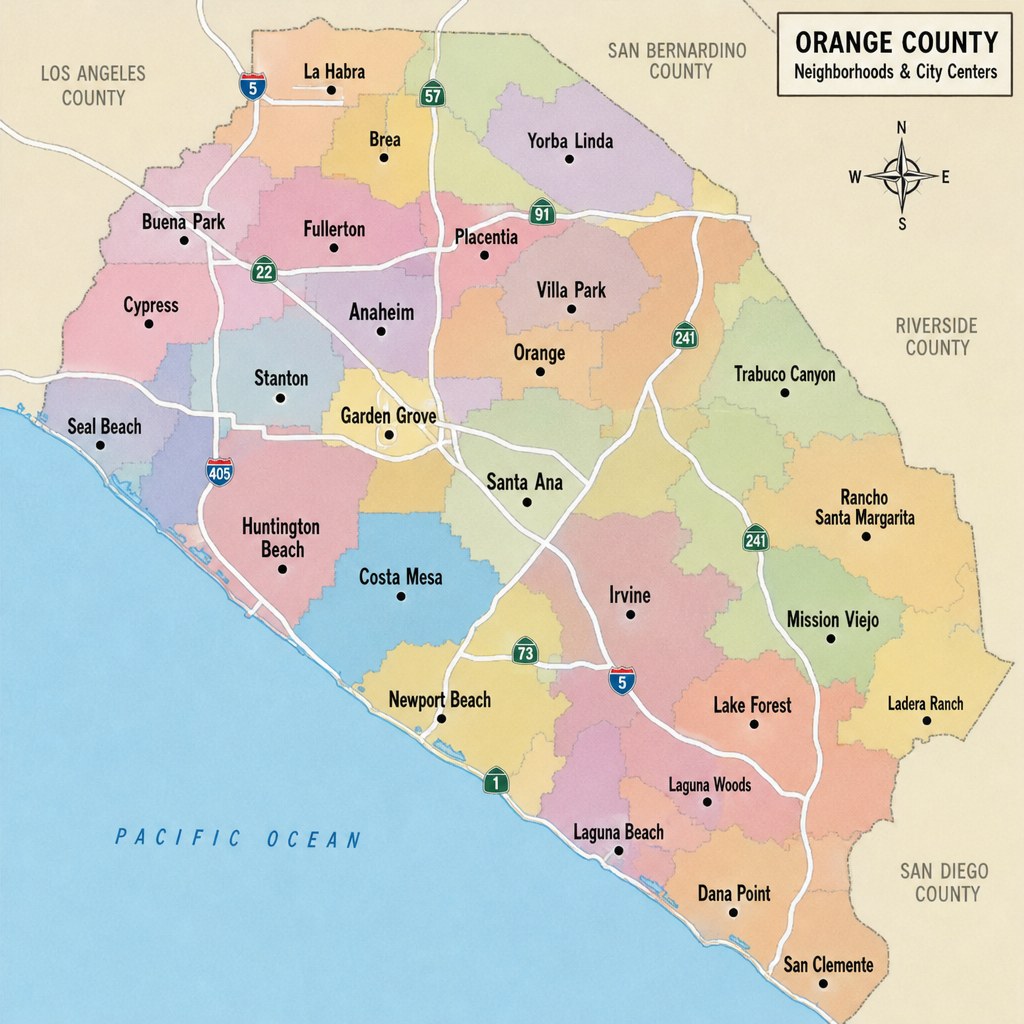
Is Orange County California safe?
Yes, Orange County California is safe for many residents and visitors by broad regional standards, but safety depends heavily on where you are, when you are there, and what type of crime you are evaluating. The county includes quiet master-planned communities, busy entertainment districts, coastal tourist areas, dense urban neighborhoods, college zones, industrial corridors, and major retail centers, so a single countywide answer can hide important local differences.
The most useful way to answer “is Orange County safe” is to separate violent crime from property crime. Many Orange County cities perform well on violent-crime measures, while everyday concerns often involve theft from vehicles, residential burglary, package theft, scams, and parking-lot crime. The California Department of Justice publishes crime data submitted by county and local law enforcement agencies, and the FBI’s crime data system is also a major source for comparing jurisdictions. (oag.ca.gov)
What Orange County crime data actually tells you
Crime numbers are helpful, but they need context. A large city with shopping centers, hotels, nightlife, stadiums, or theme-park traffic may record more total incidents simply because more people pass through it every day. A smaller residential city may look much safer by total count, but per-capita rates, neighborhood layout, and reporting practices still matter.
Another important detail is how crime is counted. The FBI required participating agencies to move to the National Incident-Based Reporting System, or NIBRS, beginning January 1, 2021, and the Orange County Sheriff’s Department began transitioning in 2021 before receiving full NIBRS certification in 2023. Because NIBRS captures more detailed incident information than the older system, older and newer crime counts should not always be compared as if the method stayed the same. (ocsheriff.gov)
That is why “Orange County crime is up” or “Orange County crime is down” can be too simple without knowing the source, year, agency, and category. The Orange County Business Council’s 2024–25 Community Indicators material reported that Orange County’s total crime index declined from 2023 to 2024 and was below both the state and national benchmark indexes in that report. This supports the broad idea that the county performs comparatively well, while still leaving room for city-by-city differences. (ocbc.org)
The safest cities in Orange County tend to share a few traits
The safest cities in Orange County are often lower-density, more residential, and built around planned neighborhoods, parks, schools, and local retail rather than high-traffic regional destinations. That does not make them crime-free. It simply means the day-to-day risk profile can look different from areas with major nightlife, tourism, transit activity, or large commercial districts.
Recent statewide safety rankings frequently place Orange County cities near the top. SafeWise’s 2026 California safest-cities report ranked Rancho Santa Margarita second statewide and Yorba Linda fifth, while also noting that its “safest” label refers specifically to crime rates calculated from FBI data. (safewise.com) OpenCrime’s 2024 FBI-based ranking also lists several Orange County cities among California’s lower violent-crime-rate communities, including Rancho Santa Margarita, Irvine, Yorba Linda, and Mission Viejo. (opencrime.us)
For people searching “safest cities in Orange County CA,” these names often come up:
- Rancho Santa Margarita: Often recognized for low reported violent and property crime rates in safety rankings.
- Yorba Linda: Frequently ranks well in statewide comparisons and has a strongly residential feel.
- Irvine: Known for low violent-crime rates among large cities and a highly organized suburban layout. See Irvine real estate.
- Mission Viejo: A largely residential South County city that often appears favorably in crime-rate comparisons. See Mission Viejo real estate.
- Laguna Niguel, Aliso Viejo, and Lake Forest: Commonly considered desirable South County options for residents who prioritize quieter neighborhoods.
- Villa Park and Laguna Woods: Smaller communities where population size, demographics, and land use can affect how rankings appear.
Use these lists as a starting point, not the final answer. The safest cities in Orange County can still have specific streets, shopping centers, trailheads, parking structures, or late-night areas where basic caution matters.
Safety can feel different in North, Central, Coastal, and South County
Orange County is not one uniform place. North County includes long-established cities with older housing stock, busy commercial corridors, and convenient access to Los Angeles County. Central Orange County has major job centers, government offices, college campuses, hospitals, malls, and transportation routes. Coastal cities attract visitors, nightlife, seasonal crowds, and beach parking activity. South County often feels more suburban, with master-planned neighborhoods, hillside communities, and family-oriented shopping centers.
These differences shape what residents actually experience. A person living in a quiet cul-de-sac in Mission Viejo may think mostly about package theft, unlocked cars, and coyotes near trails. Someone renting near a busy entertainment district in Anaheim, Costa Mesa, Fullerton, or Newport Beach may pay more attention to parking, late-night noise, alcohol-related incidents, and theft from vehicles. Someone near a beach area may feel very safe during the day but more alert around isolated parking lots after dark.
This is why asking “is Orange County safe?” should lead to a more specific question: safe for what lifestyle? A commuter, retiree, college student, family with young children, nightlife-heavy renter, and short-term visitor will each evaluate risk differently.
What should you check before moving to Orange County?
Before moving, check the city, neighborhood, commute route, and property type—not just the county name. Living in Orange County can be comfortable and convenient, but rent, home prices, parking, traffic, school boundaries, and local activity patterns can influence your sense of safety as much as crime statistics. Our guide to the best places to live in Orange County compares lifestyles by city.
A practical safety review should include:
- Look at official crime maps and police dashboards. The Orange County Sheriff’s Department provides public data resources and links to crime mapping for the areas it serves, while individual city police departments may publish their own reports. (ocsheriff.gov)
- Visit at different times. A neighborhood can feel very different on a weekday morning, Friday night, and Sunday evening.
- Check lighting and parking. Garages, alleys, carports, and isolated lots matter, especially if you arrive home late.
- Ask about property crime. Vehicle break-ins, mail theft, and package theft may be more relevant to your daily life than rare violent incidents.
- Consider commute exposure. Long commutes, freeway interchanges, and late-night gas stops can affect personal safety routines.
- Review building security. Gates, controlled access, cameras, locks, and responsive property management all influence real-world risk.
If you are choosing between cities, compare multiple sources rather than relying on one ranking. Rankings can be useful, but they use specific formulas and may exclude smaller communities, newer data, or non-crime quality-of-life factors. For the market side, see the Orange County housing market and how to buy a house in California.
Everyday Orange County security habits that make a difference
Most residents do not need to live in fear, but routine security habits are still worthwhile. SafeWise’s home-safety guidance emphasizes fundamentals like securing entry points, reducing hiding spots, and using consistent routines such as locking doors and arming security systems. (safewise.com) Those basics apply whether you live in Irvine, Santa Ana, Huntington Beach, Anaheim Hills, San Clemente, or any other part of the county.
For day-to-day Orange County security, focus on the simple things that prevent common problems:
- Lock your car every time, even in “safe” neighborhoods.
- Do not leave bags, electronics, garage remotes, or work equipment visible in vehicles.
- Use package lockers, delivery instructions, or smart doorbells if porch theft is a concern.
- Keep side gates, garage doors, and sliding doors secured.
- Trim landscaping near windows and entryways.
- Walk in well-lit areas when possible, especially near nightlife zones or empty parking lots.
- Save local non-emergency police numbers for your city.
- Report suspicious activity rather than assuming someone else will.
These steps are not dramatic, but they reduce opportunity. In low-crime areas, many incidents happen because people relax their habits: cars are left unlocked, garage doors stay open, or valuables are visible.
Visitors should stay alert in busy destinations
For visitors, Orange County is generally approachable, tourist-friendly, and easy to navigate by car. Major attractions, beaches, malls, hotels, and restaurants bring large crowds, and crowds can attract opportunistic theft. The risk is usually less about feeling unsafe walking down a street and more about protecting wallets, phones, luggage, rental cars, and beach bags.
If you are visiting Disneyland-area hotels, beach cities, shopping centers, or nightlife districts, use normal big-destination awareness. Park in visible areas, avoid leaving luggage in the car, keep phones secure in crowded places, and plan rideshare pickup points before the end of the night. Families should also set meeting spots at attractions and beaches in case someone gets separated.
The bottom line on Orange County safety
Orange County is broadly safe compared with many large California regions, and several of its cities consistently appear in conversations about the safest cities in Orange County and the safest cities in Orange County CA. Still, safety is local. The smartest answer is not “everywhere is safe” or “crime is everywhere,” but “choose the right city and neighborhood for your routine, then use common-sense security habits.”
If you are deciding where to live, start with official crime data, visit in person, compare city-level patterns, and think honestly about your daily schedule. Orange County offers many places where residents feel secure, connected, and comfortable—but the best fit is the one that matches both your lifestyle and your personal risk tolerance.
Selling a Home in Orange County?
Get a free home valuation to see what your Orange County home may be worth, then learn how Sell For Mor’s four specialists handle marketing, pricing, selling, and negotiating. See selling a house in Orange County and how it works.
Free. No obligation to sell.
Keep reading: Orange County guide and best time to sell a house in California.
This article is general information, not safety, financial or legal advice. Crime data and rankings change and vary by source; verify with local agencies. Sell For Mor is powered by Rise Realty, DRE #01957687.