
Real estate attorney closing costs are the legal fees paid for help reviewing, preparing, and completing a home sale. They may be required by state law or local practice, or they may be optional protection you choose because the transaction has legal risk. The key is to budget for these costs early, understand whether they are separate from your down payment, and confirm exactly when they are due.
When do you pay closing costs on a home?
Most closing costs are paid at the end of the transaction, when the deed, loan documents, title documents, and funds are finalized. If you are using a mortgage, your lender’s Closing Disclosure shows the final numbers before closing, including closing costs and the broader “cash to close” figure. The CFPB explains that closing costs are upfront costs tied to the loan and real estate transaction, excluding the down payment, while cash to close is the total amount you bring to closing. (consumerfinance.gov)
Attorney fees for house closing can follow the same pattern, but not always. Some attorneys collect a retainer when you hire them, especially if they expect contract negotiation, title problems, or unusual legal work. Others bill a flat fee that is paid at closing and appears with the rest of the real estate closing costs. If the matter becomes more complicated than expected, extra legal fees for a home purchase may be billed separately after closing, depending on your fee agreement.
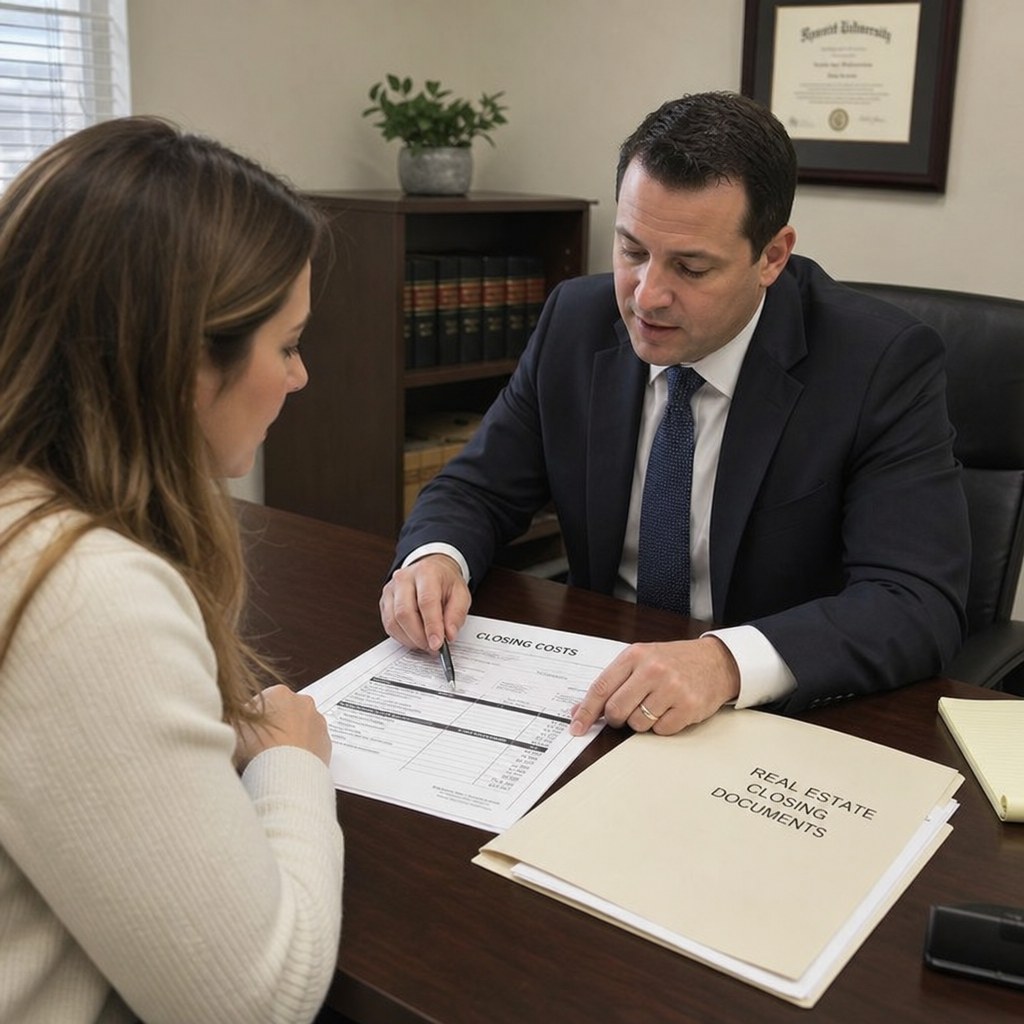
A simple timeline looks like this:
- Before signing or during attorney review: You may pay a retainer or initial review fee if your attorney is reviewing the purchase contract.
- During the contract-to-closing period: The attorney may review title, negotiate fixes, prepare documents, and coordinate with the lender, title company, or other attorney.
- At closing: Flat closing lawyer fees are often collected from buyer or seller funds and shown on the closing statement.
- After closing: Additional hourly work may be billed if there are post-closing title corrections, escrow disputes, or document issues.
This is why buyers often ask, “are closing costs separate from down payment?” Yes, they are separate categories. Your down payment reduces the loan amount; closing costs pay for services and transaction charges. But both can be part of your final cash to close, so you need to budget for them together.
Attorney fees sit inside the larger closing cost picture
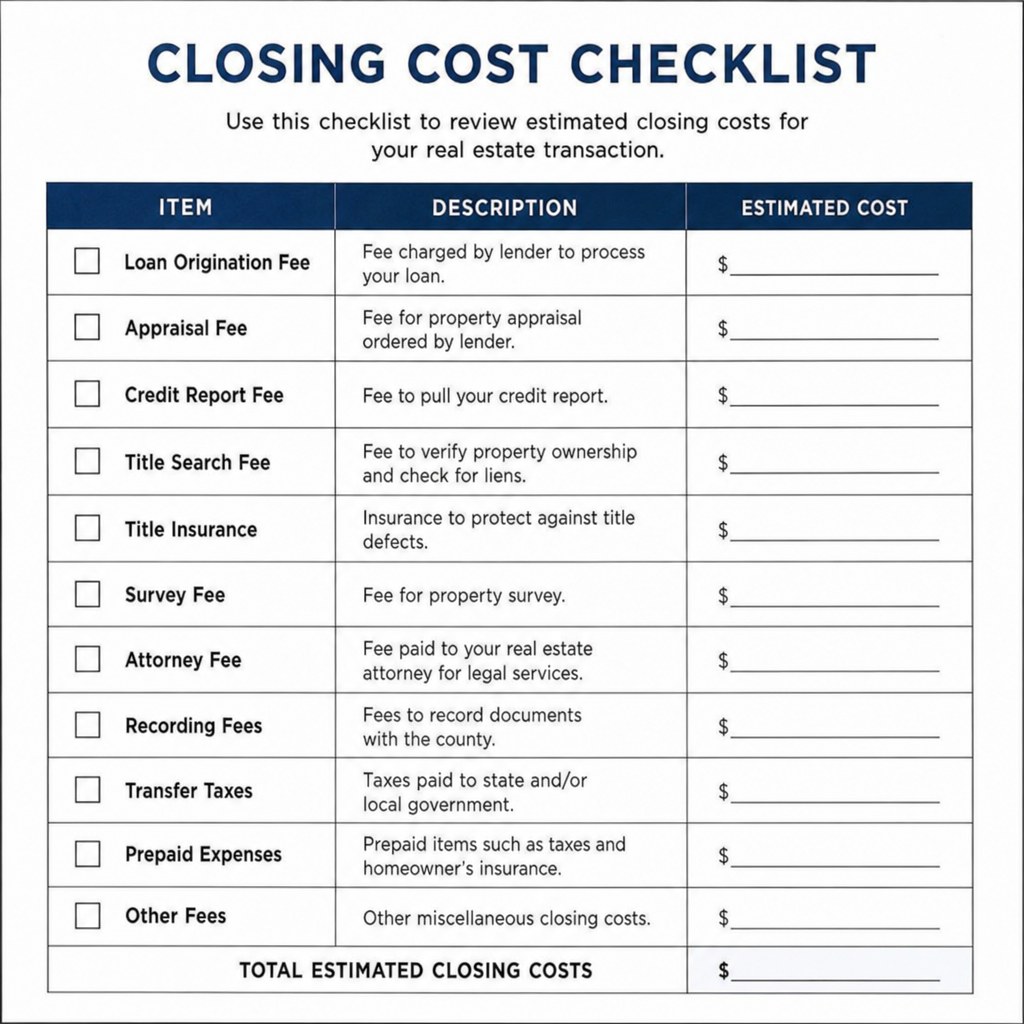
Real estate attorney closing costs are only one line item in a longer list, and sellers face their own set of charges (see seller closing costs in California and the full cost to sell a house in California). Depending on the deal, closing costs may include lender fees, title insurance, recording fees, transfer taxes, prepaid property taxes, homeowners insurance, escrow deposits, and legal fees. The CFPB’s Closing Disclosure materials show that closing cost details and cash-to-close calculations are presented separately so buyers can see how the final amount is built. (consumerfinance.gov)
That distinction matters because attorney fees can be easy to overlook. A buyer may focus on the down payment and loan approval, then discover near closing that legal review, title work, or required attorney participation adds another cost. Sellers can be surprised too, especially if their attorney prepares deed documents, negotiates inspection issues, handles payoff questions, or attends closing.
The safest approach is to ask for a written fee explanation as soon as you know you need legal help. It should state whether the fee is flat or hourly, what services are included, whether title-related work is separate, and when payment is due.
Typical cost structures for closing attorney fees
Closing attorney fees vary by location, transaction type, and the amount of work involved. For a standard residential transaction, many flat fees fall somewhere around several hundred to a few thousand dollars. Hourly arrangements are also common, particularly when a property has title defects, estate issues, boundary concerns, contract disputes, or commercial elements.
The number is not just about time spent at the closing table. A good closing attorney may spend far more time before closing than at the appointment itself. They may read the contract, explain obligations, flag risky clauses, communicate with the other side, review title evidence, prepare transfer documents, confirm payoff instructions, and help resolve last-minute problems.
Common pricing models include:
- Flat fee: A set amount for a defined closing package, often used for routine residential purchases or sales.
- Hourly billing: Time-based billing for negotiation, unusual title problems, disputes, or complex ownership structures.
- Hybrid fee: A flat closing fee plus hourly billing for work outside the standard scope.
- Retainer arrangement: An upfront deposit held against future legal work, sometimes required before contract review begins.
Before hiring, ask what would cause the fee to change. For example, does the quoted fee include contract revisions? Does it include attending closing? Are courier, wire, recording, title search, or escrow charges separate? The clearer the scope, the fewer surprises you face later.
Who pays attorney fees at closing?
The person who hires the attorney usually pays that attorney, but local custom and the purchase contract can shift or share certain costs. A buyer commonly pays the buyer’s attorney, and a seller commonly pays the seller’s attorney. However, who pays attorney fees at closing may also depend on state rules, negotiated credits, title responsibilities, and whether one attorney is serving a settlement function rather than representing one side.
In some places, attorney involvement is part of how real estate closings are handled. The National Notary Association notes that the terms “attorney closing state” or “attorney-only state” are commonly used for states where a lawyer must attend or supervise certain real estate closings. (nationalnotary.org) Because these requirements vary and can change, buyers and sellers should confirm the rule for the property’s state instead of relying on a generic national list.
Payment can also be negotiated. A seller might agree to contribute toward a buyer’s closing costs, subject to lender limits and contract terms. A buyer might request a credit after inspection instead of asking the seller to make repairs. Those credits do not always erase attorney fees directly, but they can reduce the buyer’s overall cash burden at closing.
What legal work does a closing attorney actually do?
A real estate attorney helps protect the legal side of the transaction, not just the paperwork side. Their role can vary depending on whether they represent the buyer, seller, lender, or serve a settlement function. In general, they help make sure the contract, title, deed, funds, and closing documents match the parties’ obligations.
For buyers, an attorney may explain deadlines, contingencies, financing terms, inspection language, title exceptions, survey issues, and possession terms. For sellers, an attorney may prepare or review the deed, resolve payoff questions, address title objections, and help negotiate inspection or closing disputes. In attorney-required locations, the attorney may also supervise or conduct important parts of the closing process.
Typical services may include:
- Reviewing the purchase contract before or during the attorney-review period
- Explaining rights, deadlines, contingencies, and default risks
- Negotiating contract changes or repair terms
- Reviewing title reports, liens, easements, or judgments
- Preparing or reviewing deeds and closing documents
- Coordinating payoff letters, escrow instructions, and settlement figures
- Attending or supervising closing where required or customary
- Helping resolve last-minute legal issues before funds are released
Not every closing needs every service. A simple transaction with a clear title and standard contract may require less legal work than a sale involving inherited property, divorce, unpaid liens, tenants, new construction, or a private seller-financed loan.
Attorney-required and attorney-optional closings feel different
In an attorney-required or attorney-customary market, the attorney may be built into the normal closing process. Buyers and sellers may expect to hire counsel early, and title companies, lenders, and agents may be used to coordinating with attorneys. In those markets, closing attorney fees may feel less optional because the legal role is part of how the transaction reaches the finish line.
In attorney-optional markets, a title or escrow company may handle much of the settlement process. That does not mean legal advice is unnecessary; it means the buyer or seller must decide whether the added protection is worth the cost. Escrow and title professionals can manage settlement tasks, but they generally do not serve as your personal legal advisor.
Consider hiring an attorney even when optional if:
- The contract includes unusual terms or seller financing
- The property has liens, boundary issues, easements, or title exceptions you do not understand
- You are buying from an estate, trust, divorce, foreclosure, or short sale situation
- There are tenants, leasebacks, or possession issues
- The inspection creates a dispute over repairs or credits
- You are purchasing without an agent or selling by owner (compare FSBO vs. a listing agent)
- You simply want legal advice before committing large funds
How to budget for legal fees without surprises
The best time to ask about legal fees is before you are under pressure to close. If you wait until the final week, you may have fewer choices and less time to compare scope. Start by asking your agent, lender, or title company whether attorney involvement is required or customary in your area, then contact attorneys directly for written estimates.
Use this checklist before you hire:
- Ask what is included. Contract review, title review, deed preparation, closing attendance, and negotiations may not all be included.
- Confirm when payment is due. Find out whether you owe a retainer now, a flat fee at closing, or hourly invoices later.
- Clarify who the attorney represents. An attorney handling settlement is not always your personal advocate.
- Ask about added costs. Wire fees, title searches, recording charges, courier fees, and escrow charges may be separate.
- Check how changes are billed. Disputes, adjourned closings, or title defects can increase the fee.
- Compare value, not just price. The cheapest quote may not include the work you actually need.
Also review your Loan Estimate and Closing Disclosure carefully. If an attorney fee appears different from what you expected, ask for clarification before closing day. The three-business-day Closing Disclosure review period for many mortgage transactions is designed to give borrowers time to compare final terms and costs before they sign. (consumerfinance.gov)
The practical takeaway
Attorney fees for house closing are usually part of closing costs, not part of the down payment, though both can affect the cash you need to bring to closing. The amount, timing, and responsibility for payment depend on your state, your contract, local custom, and the attorney’s fee agreement.
If you are buying or selling, do not treat legal fees as a last-minute detail. Ask early whether an attorney is required, what the closing lawyer fees include, who pays them, and when they are collected. A clear answer upfront can make the final numbers easier to understand and the closing table much less stressful.
See What You Could Take Home From Your Sale
Closing costs are one piece of what you net when you sell. Get a free home valuation to see what your home may be worth, then use our seller net proceeds calculator to plan around your costs.
Free. No obligation to sell.
Keep reading: real estate commission in California, how Sell For Mor works, and our blog post on signs your house will sell fast.
This article is general information, not legal advice. Consult a licensed attorney or escrow officer about your transaction. Sell For Mor is powered by Rise Realty, DRE #01957687.